DECAdance Competition: Where artistry and education take center stage
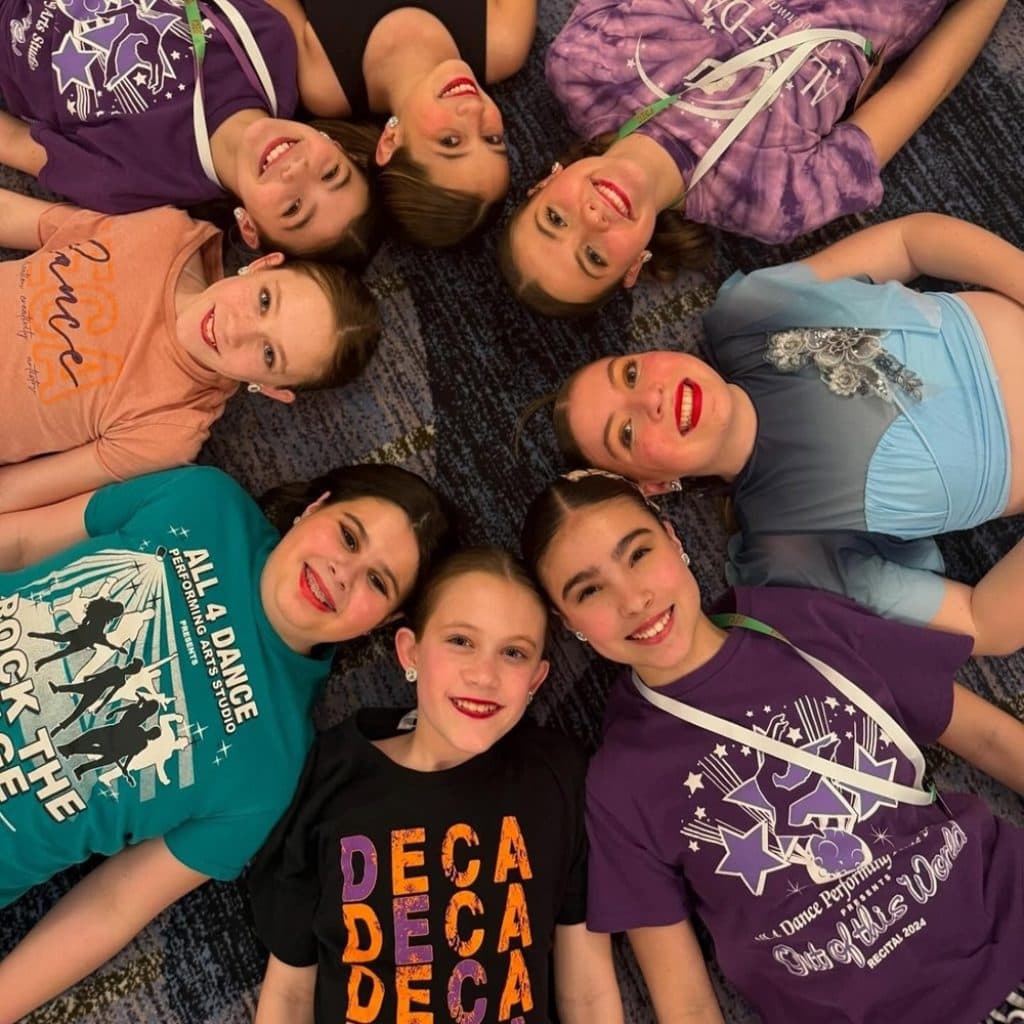
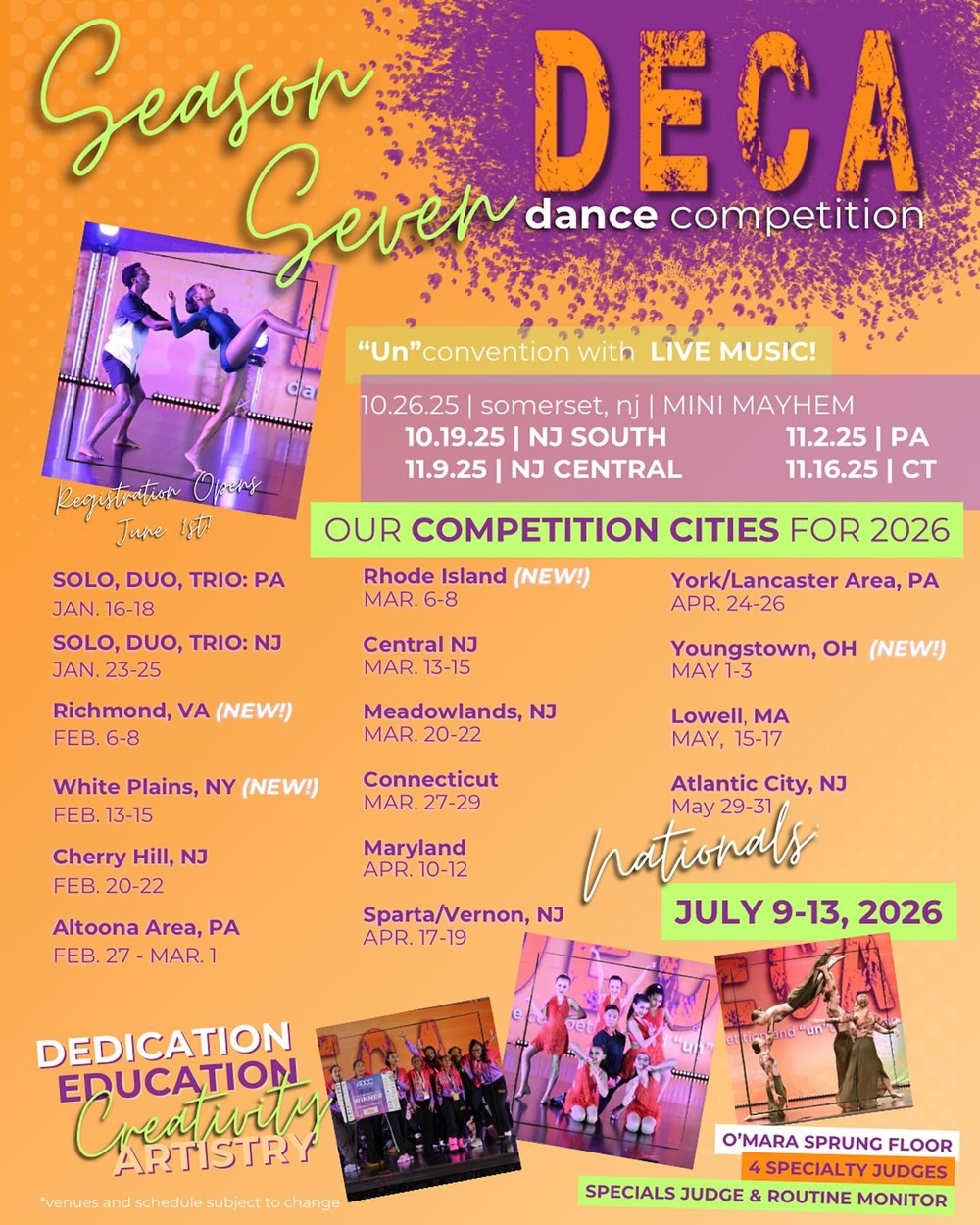
DECAdance Competition was founded in the spring of 2019, by owner Samantha Tirone O’Neil following a profound personal loss. Inspired by her now-husband’s question, ‘What lights your fire?’, O’Neil set out to create meaningful change in the dance industry. After years of research with studio owners and teachers to address common industry complaints, DECA began small and faced early challenges from COVID. Now entering its seventh season, the competition features 16 regional tour dates and a national championship – proof that a different approach can succeed.
DECA quickly tackled the most frequent complaints with practical solutions: deposit and discount options, event caps to prevent overbooking, and early registration. Beyond those administration headaches, DECA also addressed the knowledge gap with judging panels.
O’Neil shares, “Teachers and studio owners felt the judges weren’t a wide enough variety. I always felt it was very unrealistic to expect three judges to know everything there is to know about all the styles. DECA has four judges on the panel, and they’re all really well-rounded. They’re all educators first who consistently are in studios working with dancers and companies of varying ages, levels and abilities.”
Specialty judges further refine the process. O’Neil continues, “With our specialty judges, each judge has a weighted score for technique. So, let’s say you have a jazz routine onstage, the jazz judge’s technique score is weighted slightly higher.”
Another DECA difference is they are skills-based instead of hours in the studio. “We wanted to be skills-based because there’s no way for anyone to know how many hours a week you train. You could train for two hours a week and just be a really gifted dancer. We got with our judges and determined what we consider to be advanced skills,” O’Neil says. “We’re evaluating not just the skill itself but its execution. Our list of skills is ever changing, and we’re always making adjustments.”
A standout feature is DECA’s live critiques for soloists, giving dancers a chance to elevate their own performances and those of their teammates. O’Neil shares, “Something we’ve found really helpful are our live critiques; we only do them for solos. I grew up where if you were a soloist, you had to elevate the rest of your group. These soloists who are getting feedback can turn around and share their critiques with their friends in a group dance to apply to similar sections in their routine.”
DECA also prioritizes the well-being of teachers and studio staff, recognizing that supporting educators ultimately benefits the dancers. O’Neil explains, “When I was teaching, we didn’t have DoorDash. It was ordering pizza or Chinese by 9pm, hoping the order was right, and then eating cold leftovers for the next day-and-a-half. One of the things DECA really tries to do is take care of our teachers and studio staff. We always have our Teachers’ Lounge that has coffee, water and snacks. Now, we’re moving out of the schools and into hotels, so a lot of our events are fully catered. We want to promote a healthier environment by providing food that will fuel a long day.”
As they’ve grown, DECA has begun to address a once-avoided issue: age appropriateness and the oversexualization of young children. O’Neil shares, “We’re all moms and understand the professional dance world is a different beast. But in our house, at DECA, we’re a family-friendly event. We state on our website that we expect dancers to be dancing to age-appropriate music in age-appropriate costumes doing age-appropriate movement. That’s the standard we hold and we’ve stood by it. Our goal is to stay family-friendly and keep kids kids, giving them a safe space to grow and do what they love.”
For added oversight, DECA introduced a routine monitor in recent seasons, an adjudicator dedicated to ensuring compliance with rules regarding age-appropriateness, acro trick counts, skill levels and more. O’Neil says, “This is probably one of the biggest things that’s different about us – the fact that we have someone on our staff specifically making sure everyone’s where they’re supposed to be. This isn’t to undermine any of the studios that come to us, but to provide them with additional support.”
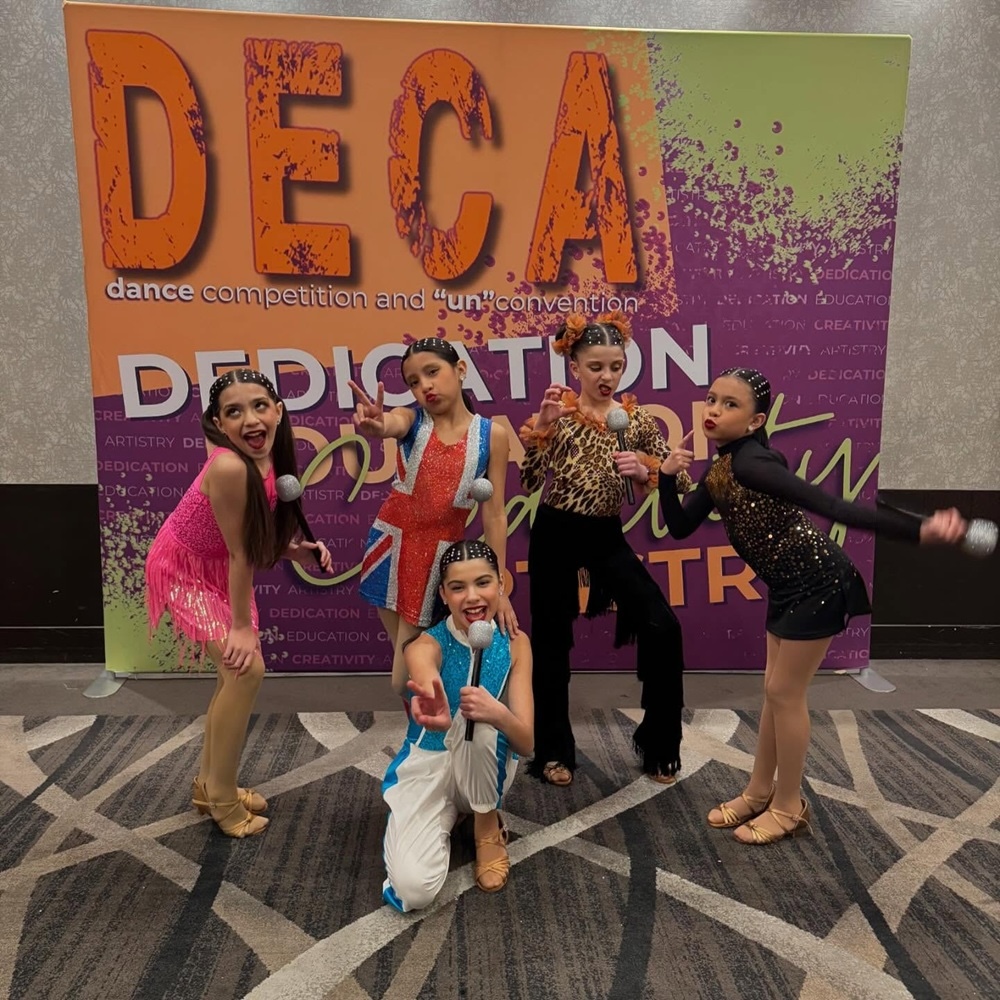
In addition to DECA’s Convention events, they also offer their “Un”conventions. These provide dancers with unique experiences they might not otherwise enjoy. “With the bulk of our ‘Un’convention series, we offer live music,” O’Neil explains. “For the 85-90 percent of dancers who don’t continue dance post-competition, this gives them an opportunity to experience the difference of working with live musicians.”
She continues, “We also really like to focus on things that kids don’t have exposure to. Our series this year included West African dance with live drumming. We also offered Bollywood and Latin. All of those ‘unconventional’ dances are tools that help the kids in all their other styles. They see the connection between ballet and Bollywood, or between West African dance and hip hop or tap.”
Education is central to who DECA is. O’Neil is passionate about equipping the next generation of dancers with knowledge to pursue dance in whatever path they choose. “If I knew then what I know now, I probably would’ve pursued a more professional dance career as a young dancer. Had I gotten some of the experiences that DECA provides from an education perspective, I think I would’ve been able to find a more dance-based path after college that wasn’t just a BFA in Dance.”
O’Neil continues, “There are so many opportunities in dance that I don’t think kids know about. Our Faces of DECA event is a great example. We bring in different people to do workshops: auditioning, dancing for a camera, picking up choreography, etc. In 48 hours, they learn the choreography, record it, take photos—all the different pieces that go into a commercial dance career. Doing things for fun is amazing, but learning and expanding your abilities only helps you.”
At the heart of DECA lies a simple but powerful belief: dance is about more than competition. It’s about growth, artistry and lifelong lessons. O’Neil captures the mission that drives everything she and DECA do, “Our acronym is Dedication Education Creativity and Artistry. So much of dance has gotten too focused on tricks, and the artistry is lost. We really do care about your kids, and we want to see them go far and grow each season.”
To learn more about DECA Dance Competition, visit decadancecompetition.com or follow @DECAdancecomp.
By Melody McTier Thomason of Dance Informa.
The post DECAdance Competition: Where artistry and education take center stage appeared first on Dance Informa Magazine.
Want to read more?
Check out the full article on the original site