UK Authorises Armed Forces To Board & Detain Russian Shadow Fleet Tankers In Its Waters
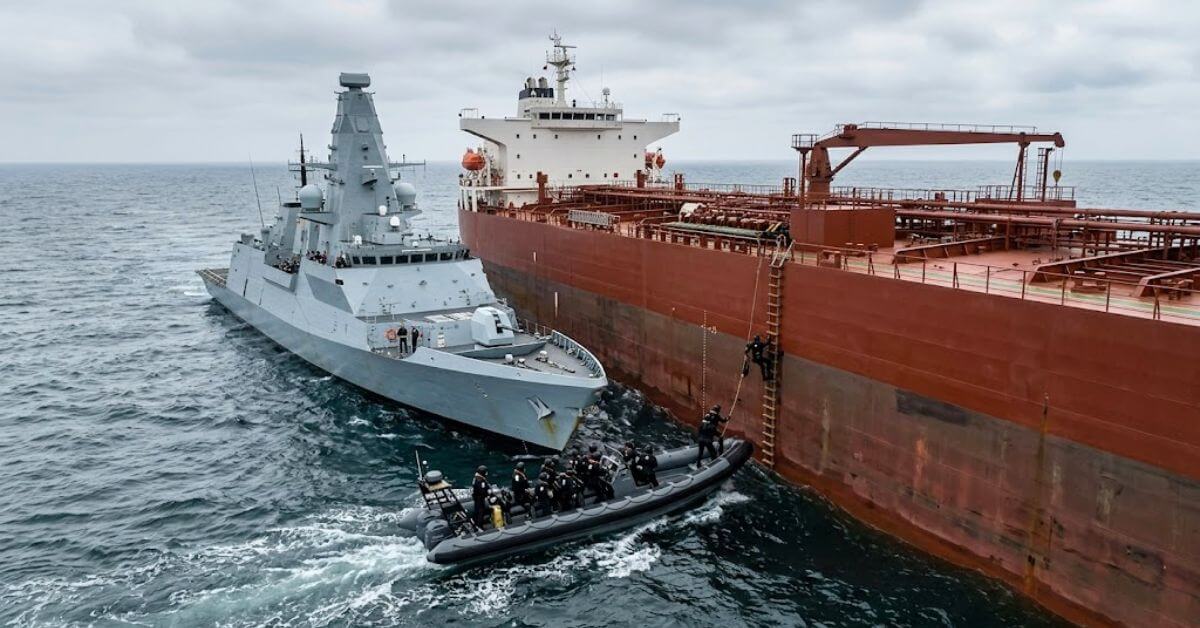
The United Kingdom has allowed its armed forces to board and detain Russian oil tankers in its waters, in a stronger move to enforce sanctions against Moscow.
The decision, approved by Prime Minister Keir Starmer, is aimed at stopping ships that are part of Russia’s shadow fleet used to export oil while avoiding Western restrictions.
According to the government, British military and law enforcement teams can now stop, board, and take action against vessels that are already under UK sanctions.
Each case will be reviewed carefully by officials from law enforcement, the military, and energy sectors before any step is taken.
If a ship is found to be violating sanctions, authorities may begin legal action against the owners, operators, and even crew members.
The Royal Navy has already been involved in such operations along with allied countries. Recently, it helped track a sanctioned Russian tanker in the Mediterranean, which was later boarded by French forces.
Earlier this year, the UK also supported the United States in seizing a tanker known as Bella 1, which had been renamed Marinera and linked to Russia in the Atlantic.
The new powers mainly target Russia’s shadow fleet, which includes older oil tankers that often operate under false flags or unclear ownership to avoid sanctions.
The UK has sanctioned around 544 such vessels, while more than 600 ships have been targeted by the UK, European Union, and the United States combined.
Per reports, about 23 of these ships were seen in January alone in areas like the English Channel and the Baltic Sea.
Officials estimate that nearly 75% of Russia’s crude oil exports are now being transported through this shadow fleet, with most shipments going to countries such as China, India, and Turkey.
The UK government believes that stopping these vessels will reduce the money Russia earns from oil sales.
The decision comes just before a meeting of the Joint Expeditionary Force in Helsinki, where 10 countries are expected to discuss ways to improve maritime security and deal with such vessels.
Countries like Finland, Sweden, and Estonia have already taken steps against suspected shadow fleet ships in the Baltic region.
Russia has warned against such actions and said it could respond if its vessels are targeted.
Officials in Moscow have suggested that the navy may be used to protect ships linked to Russian oil exports. Vladimir Putin is seen as relying on oil revenues, especially as global prices rise due to ongoing conflicts.
There are also concerns about the condition of these shadow fleet vessels. Many of them are old and not properly maintained, increasing the risk of accidents such as oil spills, leaks, or mechanical failures. This is seen as a threat to busy sea routes like the English Channel.
References: theguardian, reuters
Want to read more?
Check out the full article on the original site