IRGC Navy Warns U.S. Of New “Surprise Tactics” Amid Rising Gulf Shipping Tensions
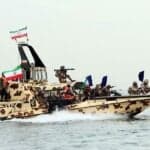


Iran’s Islamic Revolutionary Guard Corps (IRGC) Navy has warned the United States that it is ready to use “surprise tactics” if tensions increase further in regional waters.
According to Iranian state media Press TV, Mohammad Akbarzadeh, deputy for political affairs of the IRGC Navy, said the force has unconventional methods prepared in case Washington makes any new miscalculation.
He added that if the US takes fresh military action against Iran, the IRGC Navy would use its newly developed capabilities.
Tensions continue to build around key maritime routes, especially the Strait of Hormuz, which is one of the world’s most important shipping lanes for oil and cargo movement.
Iranian officials have been saying that their naval forces have upgraded their equipment and operational approach to deal with foreign military presence in nearby waters.
At the same time, US President Donald Trump has taken a firm stand on Iran’s recent diplomatic efforts. He said the United States would not move forward with negotiations unless Iran addresses its nuclear programme directly.
He also claimed that Iran had suggested it was under pressure and wanted the Strait of Hormuz to reopen quickly.
Trump warned that if Iran develops nuclear weapons, it could pose a serious threat to global security.
His comments came after Iran proposed an immediate ceasefire in West Asia and the resumption of maritime traffic through the Strait of Hormuz.
However, Iran’s proposal did not include immediate discussions on its nuclear programme, missile systems, or sanctions.
Foreign Minister Abbas Araghchi has visited Islamabad and met Russian President Vladimir Putin in St Petersburg to gather international support.
Leaders of the Gulf Cooperation Council (GCC), meeting in Saudi Arabia under Crown Prince Mohammed bin Salman, rejected what they described as Iran’s “illegal actions” related to threats against shipping and the possible closure of the strait.
The meeting included senior leaders from Qatar, Bahrain, Kuwait, and the United Arab Emirates. The group called for restoring full security and freedom of navigation in the region.
They also supported stronger military coordination, including shared defence systems and a ballistic missile early warning system.
Reports from The Wall Street Journal suggest that the United States is preparing for a longer-term strategy against Iran.
President Trump has reportedly asked his team to plan a sustained maritime blockade aimed at limiting Iran’s oil exports and controlling access to its ports.
According to the report, this approach is being considered as a lower-risk option compared to direct military strikes or stepping back completely. It focuses on applying economic pressure over time by controlling maritime routes.
Reference: ANI News
Want to read more?
Check out the full article on the original site