Abu Dhabi Tests AI-Powered Driverless Patrol Boats To Strengthen Maritime Safety
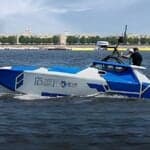


Abu Dhabi has started testing AI-powered driverless patrol boats as part of its efforts to improve maritime safety and law enforcement across its inland waterways.
The 7-metre autonomous vessels are being developed through a partnership between the Integrated Transport Centre (ITC), the Smart and Autonomous Systems Council, Abu Dhabi Investment Office (ADIO), Blue Gulf Group, and Abu Dhabi Maritime.
These field trials are focused on checking how well the boats can support monitoring and enforcement activities without onboard crews.
Officials involved in the project said the aim is to use advanced control systems to improve surveillance and ensure that companies and individuals operating in the waterways follow existing laws and regulations.
Once the testing phase is completed, the boats are expected to be deployed for regular patrol duties.
The trials are part of a plan to strengthen Abu Dhabi’s maritime transport sector and expand the use of smart mobility solutions.
Authorities are working on integrating artificial intelligence and related technologies into vessels to improve monitoring accuracy and operational efficiency.
This move also supports Abu Dhabi’s long-term goal of becoming a global centre for innovation and smart mobility.
The project is being carried out under the supervision of the Smart and Autonomous Systems Council, with cooperation from Abu Dhabi Maritime to improve safety standards and regulatory oversight.
The development comes after ADNOC Logistics & Services introduced its own AI-powered autonomous vessels last year.
These vessels are being built for remote maritime operations and are expected to be delivered by late 2026.
They will include satellite-linked systems, hybrid power supply, and will be operated remotely from a control centre in Mussafah.
At the same time, Abu Dhabi Ship Building is constructing advanced patrol and interception vessels for the Critical Infrastructure and Coastal Protection Authority under a contract worth AED 175 million signed in February 2023.
These include the 120 Fast Inshore Platform and 160 Inshore Tactical Engagement Platform vessels, which are designed for nearshore rescue and extended search and rescue operations.
The use of autonomous systems is becoming more common across the maritime sector as authorities look for ways to improve safety and efficiency.
The ongoing trials in Abu Dhabi are expected to support better monitoring, faster response, and improved compliance across waterways.
Abu Dhabi has also been expanding the use of autonomous technology beyond the maritime sector.
During the Abu Dhabi Autonomous Summit held on Yas Island in November, 29 agreements were signed to introduce driverless systems across sectors such as logistics, healthcare, e-commerce, and transport.
Driverless vehicle services have already been introduced in the city. Robotaxi services operated by Uber and WeRide began operating after initial trials, using vehicles equipped with level-four autonomy.
In March, additional robotaxis run by Autogo, a unit of technology company K2, were deployed in the capital.
These services are currently operating in areas such as Yas Island, with plans to expand to Al Reem Island, Al Maryah Island, and Al Saadiyat Island.
References: theweek, gulfnews
Want to read more?
Check out the full article on the original site