Trump Launches ‘Project Freedom’ To Escort Stranded Ships Out Of Strait Of Hormuz Amid Ongoing Tensions
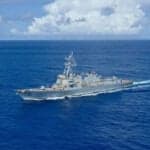


The United States has begun a new operation called “Project Freedom” on May 4, 2026, to guide commercial ships out of the Strait of Hormuz, where hundreds of vessels and thousands of seafarers have been stuck for weeks.
U.S. President Donald Trump said the effort will help ships from “neutral and innocent” countries move safely through the restricted waterway so they can continue normal operations.
The announcement was made on May 3 through a social media post.
The operation is expected to support a large number of vessels, with nearly 20,000 crew members still stranded in the region since the conflict involving Iran began on February 28.
Many of these ships are oil tankers, gas carriers and cargo vessels.
The U.S. Central Command said the mission will include guided-missile destroyers, more than 100 aircraft and around 15,000 service members.
These forces will help escort merchant ships through the route, which carries about one-fifth of the world’s oil and natural gas, along with fertilizers and other petroleum products.
Seafarers on board stranded ships have reported difficult conditions, including shortages of food, drinking water and other supplies.
Some crew members have also described seeing drones and missiles intercepted near their vessels.
Trump described the plan as a humanitarian effort and said discussions with Iran are ongoing, which could lead to a positive outcome.
At the same time, he warned that any interference with the operation would be dealt with forcefully.
Iran reacted cautiously. Some Iranian media called the announcement a “claim,” while officials said any foreign action in the strait could be seen as a violation of the current ceasefire.
Iran has maintained that it controls the strait and has allowed passage only under certain conditions, including reported toll payments for some ships.
Security risks in the area remain high. On May 3, a cargo ship near Sirik, Iran, reported being approached by several small craft, according to the United Kingdom Maritime Trade Operations centre.
Another vessel near Fujairah in the United Arab Emirates reported being hit by unknown projectiles. No injuries were reported in either case.
These incidents are part of at least two dozen attacks reported in and around the strait since the conflict began.
Iranian authorities denied involvement in one of the cases, saying the vessel had only been stopped for document checks.
Ships near Ras al-Khaimah also reported receiving radio messages telling them to move from anchorage, although it is not clear who sent those warnings.
Iran is currently reviewing a U.S. response to its latest proposal to end the conflict. Officials said the talks are not related to nuclear issues at this stage.
The proposal reportedly includes lifting U.S. sanctions, ending the naval blockade, withdrawing forces from the region and stopping all military actions, including those linked to Israel.
Pakistan has been encouraging both sides to hold direct talks and has already hosted discussions between them, according to officials familiar with the matter.
Iran has said it will not return to pre-war conditions in the Strait of Hormuz. At the same time, the United States has warned shipping companies that paying Iran for safe passage could lead to sanctions.
The U.S. naval blockade, which began on April 13, has already reduced Iran’s oil earnings.
U.S. officials said dozens of ships have been turned back, and Iran’s oil storage is filling up quickly, which could soon affect its production.
Project Freedom is expected to begin as planned, but the situation in the region remains uncertain, with ongoing risks for commercial shipping.
Reference: US Central Command
Want to read more?
Check out the full article on the original site