Iran Claims Missile Strike Forced U.S. Warship To Retreat In Strait Of Hormuz; U.S. Denies Hit
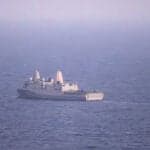


Iran on Monday said it forced a US naval vessel to retreat from the Strait of Hormuz after firing missiles near the southern port of Jask, but the United States denied that any of its ships were hit.
Iran’s semi-official Fars news agency reported that two missiles struck a US warship attempting to transit the strait, claiming the vessel was forced to turn back.
Iranian military officials also stated that naval forces had issued a “swift and decisive warning” to prevent what they described as “enemy warships” from entering the waterway.
However, the US military rejected the claim. United States Central Command said no US Navy ships had been struck and confirmed that its forces remain active in the region.
US officials stated that naval assets, including guided-missile destroyers, continue to operate in the Gulf while supporting a new mission aimed at restoring commercial shipping through the strait.
The exchange came as Donald Trump announced “Project Freedom,” an initiative to assist hundreds of commercial vessels stranded in the Gulf due to the ongoing conflict involving the US, Israel, and Iran.
According to US statements, the plan is intended to guide ships safely out of restricted waters after more than two months of disruption.
Iran responded by warning foreign forces not to enter the strait without coordination.
Ali Abdollahi, head of Iran’s unified military command, said the country considers itself responsible for the security of the waterway and warned that any unauthorized military presence would face a strong response.
Iran has also instructed commercial ships and oil tankers to avoid movement unless approved by its forces, tightening its control over one of the world’s most important maritime chokepoints.
The situation has severely affected global shipping. Nearly all traffic through the strait, except Iranian-linked vessels, has been restricted since late February.
The disruption has impacted around 20% of global oil and gas flows, pushing energy prices significantly higher.
The US military said it is deploying around 15,000 personnel, more than 100 aircraft, and multiple warships and drones to support the effort to reopen the route.
It added that at least two US-flagged merchant vessels have already successfully transited the strait under its current operations.
Authorities in the United Arab Emirates said they intercepted three missiles, while another fell into the sea.
A drone strike also caused a fire at Fujairah, the country’s largest port and oil hub. Officials later confirmed that three Indian nationals were injured and taken to hospital.
Separately, a fire and explosion were reported aboard a South Korean-operated vessel in the Strait of Hormuz, though it remains unclear whether the incident was linked to Iranian military action.
Iran is currently reviewing a US response to its proposed peace framework, which reportedly includes demands such as lifting sanctions, ending blockades, and withdrawing US forces from the region.
Washington, however, continues to insist on restrictions related to Iran’s nuclear program before any agreement.
References: News18, Abc net
Want to read more?
Check out the full article on the original site