Iran Enforces New Permit Rule For Ships In Strait Of Hormuz, Warns Of Action For Route Violations
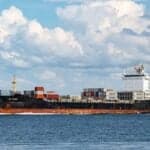


Iran has introduced a new system to regulate ships passing through the Strait of Hormuz, making it mandatory for vessels to obtain permission before entering one of the world’s most important oil routes.
According to reports from Iran’s state-run media, ships planning to transit the Strait will receive emails from an official address linked to the Persian Gulf Strait Authority (PGSA).
These messages will include updated rules and instructions that vessels must follow before crossing the waterway.
Under the new system, all ships are required to get a transit permit in advance. Iranian authorities have described the initiative as a sovereign governance system that is now fully operational in the Strait.
The route remains a key passage for global energy trade, with around 20% of the world’s traded oil moving through it.
Mohammad Bagher Ghalibaf, Iran’s parliament speaker and chief negotiator, said a “new equation” is being formed in the Strait.
In a statement shared on social media, he said Iran considers the current situation in the waterway unacceptable for the United States. He also said Iran has not yet fully acted and suggested more changes could follow.
At the same time, the naval wing of the Islamic Revolutionary Guard Corps has issued a fresh warning to ships.
The IRGC Navy instructed all ships to strictly follow a designated maritime corridor previously announced by Iranian authorities.
The force warned that any deviation from this route would be considered unsafe and could lead to direct action.
The warning was repeated through Iranian state media, with the IRGC stating that the designated corridor is the only safe route for ships passing through the Strait.
These developments follow increased military and political tensions between Iran and the United States over control and security of the Strait.
US Defence Secretary Pete Hegseth said that American efforts to guide commercial ships in the region are separate from other military operations currently taking place.
Per reports, Iran has taken stricter measures against certain vessels. Iranian forces have blocked ships linked to the US and Israel following recent conflict.
A draft law being discussed in Iran’s parliament proposes a complete ban on ships connected to Israel, while vessels linked to the US and other countries could face restrictions.
The proposal also includes a system where non-hostile ships may have to pay tolls to pass through.
Tensions have increased further after the United States launched an operation aimed at challenging Iran’s control over the Strait. Iranian forces have warned US warships to stay away from the area.
Reports say Iranian naval units fired missiles and drones near US destroyers that did not respond to warnings.
Iran has said it will continue to maintain control over the Strait and warned that any attempt to challenge its authority will be met with force.
The Strait of Hormuz remains a vital route for oil and liquefied natural gas shipments, and any changes in its operation continue to affect global shipping and energy markets.
References: Presstv, firstpost
Want to read more?
Check out the full article on the original site