Over 9,000 Filipino Seafarers Repatriated Amid Ongoing Crisis In Strait Of Hormuz


More than 9,000 overseas Filipino workers (OFWs) have returned to the Philippines amid the continuing crisis in the Strait of Hormuz, according to Migrant Workers Secretary Hans Leo Cacdac.
Cacdac said 9,038 OFWs had been repatriated as of May 7, with the government continuing repatriation flights and financial assistance for affected workers.
Speaking during a press briefing at Ninoy Aquino International Airport Terminal 1, Cacdac said repatriation flights would continue, including operations from Kuwait, where more returning workers are expected.
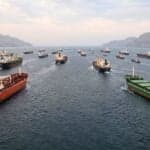
The Department of Migrant Workers (DMW) is also monitoring Filipino seafarers operating in the Gulf region as security concerns remain high around the Strait of Hormuz, one of the world’s busiest shipping routes.
According to the DMW, around 1,400 Filipino seafarers have already exited the Strait of Hormuz as part of ongoing extraction efforts coordinated with manning agencies and shipowners.
The figure includes 92 crew members aboard four vessels that departed the area within the past week.
The government has also started allowing replacement Filipino crew members to board vessels in the region, particularly for seafarers whose contracts have expired or those experiencing fatigue or post-traumatic stress.
Cacdac also confirmed a serious incident involving Filipino crew members aboard the Malta-flagged containership CMA CGM San Antonio, which was allegedly struck by an Iranian drone while transiting near the Strait of Hormuz close to Oman on May 5.
Seven out of eight Filipino seafarers aboard the vessel were injured in the incident.
According to Cacdac, four crew members sustained relatively minor injuries, while three others remained in serious condition and were being closely monitored.
Some of the injured seafarers were admitted to an intensive care unit at an undisclosed hospital.
“All survivors have been taken out of the ship,” Cacdac said during the briefing, adding that the government remains in contact with both the injured crew members and their families.
The DMW said it continues to coordinate with manning agencies and shipowners to facilitate the extraction and repatriation of Filipino workers from the Persian Gulf as regional tensions persist.
The Strait of Hormuz is one of the world’s most important shipping corridors, linking the Persian Gulf with the Gulf of Oman and the Arabian Sea.
The route is heavily used by commercial vessels, oil tankers, container ships, and international maritime trade traffic.
Shipping companies, manning agencies, and governments have been monitoring crew safety, vessel routing, and repatriation measures as security risks increase across the Gulf.
References: philstar, safety4sea
Want to read more?
Check out the full article on the original site