Watch: Iranian Navy Seizes Oil Tanker In Gulf Of Oman As US Disables 2 Ships Near Hormuz
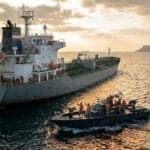


Iran’s Navy has seized the oil tanker Ocean Koi in the Gulf of Oman, accusing the vessel of attempting to disrupt the country’s oil exports.
According to the statement, Iranian naval commandos intercepted the tanker during a “special operation” in the Gulf of Oman and escorted it to Iran’s southern coast before handing it over to judicial authorities.
Iranian authorities claimed the tanker was carrying Iranian crude oil and had attempted to exploit the ongoing regional situation to damage the country’s oil exports and national interests.
State-owned Press TV released footage showing Iranian forces boarding and detaining the vessel. Shipping data from MarineTraffic identified the tanker as being registered in Barbados.
Iran Navy commandos seized the oil tanker OCEAN KOI in a special operation after it attempted to disrupt Iran’s oil exports and national interests.
Follow: https://t.co/mLGcUTS2ei pic.twitter.com/rPrIkVCqCv
— Press TV
(@PressTV) May 8, 2026
CENTCOM commander Admiral Bradley Cooper stated that US forces would continue enforcing a blockade on vessels entering or leaving Iran.
Earlier, US President Donald Trump claimed Iranian forces had targeted three US Navy destroyers operating in the Strait of Hormuz.
Iran’s top joint military command, meanwhile, accused the US of violating the ceasefire by attacking an Iranian oil tanker and another vessel.
Iranian authorities said 10 sailors were injured in the reported US strike, while five others were missing.
The military command also alleged that US forces carried out air attacks on civilian areas on Qeshm Island near the entrance of the Strait of Hormuz.
Iran stated that it responded by targeting US military vessels east of the strait and south of the port of Chabahar.
Despite the exchange, Trump later described the incident as a “love tap” and said the ceasefire remained intact.
US Secretary of State Marco Rubio also stated that Washington was still awaiting Tehran’s response to a proposal aimed at reaching a longer-term agreement.
Meanwhile, Qatar confirmed that Vice President JD Vance met Qatari Prime Minister and Foreign Minister Sheikh Mohammed bin Abdulrahman bin Jassim Al Thani in Washington to discuss Pakistan-led mediation efforts aimed at reducing tensions.
Iranian Foreign Ministry spokesperson Esmaeil Baghaei said Tehran was reviewing the latest proposal while warning that Iranian forces remained prepared to respond to any further “aggression and adventurism”.
Iran has imposed stricter controls on shipping traffic through the strategic waterway, while the US has maintained a naval blockade targeting Iranian maritime trade since April 13.
According to maritime tracking firm TankerTrackers, the Ocean Koi had previously operated under the name Jin Li and had transported Iranian hydrocarbons at least 16 times since 2021.
The US Treasury Department had earlier identified the vessel as part of a so-called shadow fleet allegedly used to move Iranian oil in violation of US sanctions.
Windward AI, a maritime tracking company, stated that the tanker already had an established history within Iran’s oil trade network, suggesting the seizure may have been intended to project regional authority.
Shipping disruptions in the region continue to intensify. Per reports, nearly 1,600 vessels remain stranded in the Persian Gulf following Iran’s effective closure of the Strait of Hormuz and the ongoing US naval blockade.
Before the conflict escalated, roughly 130 vessels transited the Strait of Hormuz each day.
Iranian officials and analysts quoted by regional media also pointed to plans for a new maritime control framework in the Strait of Hormuz.
Under the proposed system, vessels intending to transit the waterway would reportedly need prior coordination and clearance from Iranian authorities, including details about cargo, origin, destination, and payment of toll fees.
The Strait of Hormuz remains one of the world’s most critical maritime chokepoints, handling around one-fifth of global oil trade under normal conditions.
Any disruption in the area directly impacts tanker traffic, freight rates, marine insurance costs, and global energy markets.
The Gulf of Oman and Strait of Hormuz are heavily monitored maritime corridors where naval patrols, sanctions enforcement operations, and tanker inspections have increased sharply since the latest regional conflict began.
References: Al Jazeera, Press TV
Want to read more?
Check out the full article on the original site