U.S. Prepares Charter Flight To Repatriate Americans After Hantavirus Outbreak On Cruise Ship Kills 3
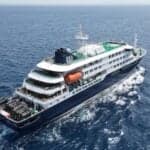


The United States is preparing a medical repatriation operation to bring home American passengers from the expedition cruise ship MV Hondius after a hantavirus outbreak on board killed three passengers.
The U.S. State Department, the Centers for Disease Control and Prevention (CDC), and the Department of Health and Human Services are coordinating the evacuation plan with Spanish authorities as the vessel approaches Tenerife in Spain’s Canary Islands.
The CDC said a government-chartered medical repatriation flight will transport American passengers from the Canary Islands to Offutt Air Force Base in Omaha, Nebraska.
The passengers will then be transferred to the National Quarantine Unit at the University of Nebraska Medical Center for monitoring.
Officials said there are 17 Americans currently on board the vessel operated by Oceanwide Expeditions.
The cruise departed from Ushuaia, Argentina, on 1 April and is scheduled to arrive near Tenerife on 10 May.
Spanish officials said the vessel will remain anchored offshore after authorities declined to allow it to dock directly in Tenerife.
Passengers are expected to disembark in small groups using boats to minimise infection risks.
Spanish civil protection officials said passengers would be moved through isolated routes directly to airport facilities, where repatriation aircraft from their respective countries would already be positioned.
Health authorities confirmed that none of the 147 people on board were showing symptoms on Friday, although the World Health Organization warned additional cases could still emerge because the disease has an incubation period of up to six weeks.
At least nine confirmed or suspected cases have been linked to the outbreak, including three deaths involving a Dutch couple and a German woman.
Officials said the Dutch couple had reportedly travelled through Argentina, Uruguay and Chile before boarding the cruise and had visited bird-watching areas associated with the Andes strain of hantavirus.
Health officials confirmed that the Andes strain, the only known hantavirus strain capable of human-to-human transmission, was identified among positive cases.
The CDC classified the outbreak response as a Level 3 emergency activation, its lowest emergency response level.
The agency said epidemiologists and medical teams were being deployed to the Canary Islands to assess exposure risks among American passengers and determine the level of monitoring required after their return.
A second CDC support team is also being sent to Nebraska to assist with quarantine and medical observation procedures.
Nebraska health officials said returning passengers would stay in individual rooms equipped with internet access and exercise facilities if monitoring periods become prolonged.
Medical officials added that no fixed quarantine duration had yet been established.
Authorities across at least six U.S. states are monitoring possible exposures linked to passengers who had already left the vessel earlier in the voyage.
State health departments are tracking possible cases in Georgia, Texas, Virginia, Arizona and California.
According to Oceanwide Expeditions, six Americans and more than two dozen other passengers disembarked at St Helena, a British overseas territory, on 24 April.
New Jersey Governor Mikie Sherrill said two residents of the state may also have been exposed during a flight shared with an infected passenger after leaving the cruise.
The World Health Organization said the current outbreak was unlikely to develop into a pandemic similar to Covid-19 because transmission of the Andes strain generally requires close and intimate contact.
However, WHO officials warned that international monitoring remained necessary due to the lengthy incubation period and the number of passengers who had already travelled internationally.
The CDC said the risk to the wider American public remained extremely low.
The outbreak has also drawn attention to recent staffing reductions within U.S. health agencies.
Around 10,000 positions were cut across the Department of Health and Human Services, including roles within the CDC and the National Institutes of Health, although some employees were later rehired.
Per reports, the CDC’s dedicated Vessel Sanitation Program staff, responsible for assisting cruise ships with disease prevention and outbreak management, had been eliminated in April during federal cost-cutting measures.
Some health experts warned that the U.S. withdrawal from the World Health Organization could affect future outbreak coordination by reducing access to international disease surveillance data and contact tracing networks.
WHO officials said the CDC continues to share information with international partners despite the funding reductions.
MV Hondius is an expedition cruise vessel operated by Oceanwide Expeditions and commonly used for polar and remote-region voyages.
The outbreak involved the Andes strain of hantavirus, which is considered the only hantavirus variant known to spread between humans.
Most hantavirus infections are typically linked to exposure to rodents through contaminated urine, droppings or saliva particles in the air.
The evacuation plan involves controlled offshore disembarkation procedures, isolated passenger transport corridors, and direct medical repatriation flights to reduce exposure risks during transfer operations.
References: BBC, The Hindu
Want to read more?
Check out the full article on the original site