Trump Considers Reviving ‘Project Freedom’ With Expanded Mission Beyond Strait Of Hormuz Escorts
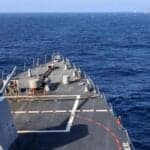


US President Donald Trump said he is considering restarting “Project Freedom”, a maritime security initiative aimed at protecting shipping routes in the Middle East, though with a wider role than simply escorting vessels through the Strait of Hormuz.
Speaking during a phone interview with Fox News on Monday, Trump said discussions on the operation are still ongoing and no final decision has been made.
Trump first introduced “Project Freedom” last week as a plan to provide military escorts for commercial and allied vessels moving through the Strait of Hormuz amid concerns over possible attacks and disruptions to shipping traffic.
The initiative was later paused after diplomatic talks and peace negotiations with Tehran gained momentum.
The temporary suspension was seen as an effort to avoid further escalation while negotiations continued.
The Strait of Hormuz remains one of the world’s most important energy transit routes, carrying a major share of global oil and liquefied natural gas supplies.
The conflict has increased concerns over the waterway after Iran reportedly restricted movement through the strait while allowing only limited shipping traffic and imposing tolls on vessels.
Shipping activity through the waterway has dropped sharply compared with pre-war levels.
Data from Kpler and LSEG reportedly showed that only three crude tankers exited the strait last week, with some vessels switching off tracking systems to reduce the risk of attack.
A second Qatari LNG tanker was also attempting to transit the strait under an arrangement reportedly involving Iran and Pakistan.
Brent crude futures rose more than 3% to above $104 per barrel as concerns over shipping disruptions and energy supplies intensified.
Trump said tensions escalated further after he rejected Iran’s latest response to a US-backed proposal intended to end the conflict and reduce concerns surrounding Tehran’s nuclear programme.
During remarks on Sunday, Trump reportedly described Iran’s response as “totally unacceptable” and later said the ceasefire was “on life support”.
The US proposal had reportedly focused on ending the fighting before moving to more difficult issues, including Iran’s nuclear programme and maritime security concerns.
Iran’s proposal reportedly called for an end to fighting across the region, compensation for war damage, removal of the US naval blockade, guarantees against future attacks, and the resumption of Iranian oil sales.
Tehran also reportedly demanded formal recognition of its sovereignty over the Strait of Hormuz.
Iranian Foreign Ministry spokesman Esmail Baghaei said Tehran would not give up what it described as its “legitimate rights” and accused Washington of maintaining “one-sided views and unreasonable demands”.
Iranian parliament speaker Mohammad Baqer Qalibaf said Iran’s armed forces were prepared to respond to any further aggression.
Israeli Prime Minister Benjamin Netanyahu also said military action remained possible if diplomacy failed, adding that the conflict was “not over” and that removing enriched uranium from Iran remained a key objective.
Trump also claimed that Iran informed Washington that the US would have to retrieve nuclear material buried underneath Iranian facilities following joint US-Israeli attacks.
He said the material was buried too deep for Iran to access and that the matter would need further discussion.
The United States on Monday imposed new sanctions on individuals and companies accused of helping Iran ship oil to China as part of efforts to restrict funding linked to Tehran’s military and nuclear programmes.
Meanwhile, Pakistan is continuing efforts to mediate between Washington and Tehran.
Officials familiar with the discussions said Islamabad is trying to help both sides reach a memorandum of understanding that could end the conflict and open the door for negotiations.
Trump is also expected to raise the Iran issue during his upcoming visit to China, where he plans to urge President Xi Jinping to pressure Tehran.
China remains the largest buyer of sanctioned Iranian crude oil, giving Beijing significant influence over Iran’s energy exports.
The conflict has also increased pressure inside the United States as fuel prices continue to rise.
According to AAA data cited in the reports, US gasoline prices have climbed above $4.50 per gallon since the conflict began earlier this year.
Trump said his administration is considering suspending the federal gasoline tax, currently set at 18%, to help lower fuel prices. US Energy Secretary Chris Wright said the administration is reviewing all available options to reduce costs for consumers.
A Reuters/Ipsos poll completed on Monday reportedly showed growing public concern in the United States over the war and its economic impact.
According to the poll, many Americans believed Trump had not clearly explained the goals of US military involvement in Iran.
International support for reopening the Strait of Hormuz also remains uncertain. Per reports, several NATO allies have refused to send naval forces to the region without a peace agreement and an internationally mandated mission.
Turkey’s Foreign Minister Hakan Fidan is expected to hold talks in Qatar on navigational safety in the Strait of Hormuz and the conflict.
Separate reports also suggested that the United Arab Emirates carried out strikes on Iranian targets, including a reported attack on a refinery on Lavan Island last month, though Reuters said it could not independently verify the claims.
The Strait of Hormuz connects the Persian Gulf with the Gulf of Oman and remains one of the world’s busiest maritime energy routes.
Before the conflict began, the waterway handled around one-fifth of global oil and LNG supplies.
Any disruption to traffic through the strait can quickly affect tanker operations, freight rates, marine insurance costs, refinery supply chains, and global energy prices.
References: livemintl, Reuters
Want to read more?
Check out the full article on the original site