US, China Agree No Country Should Be Allowed To Impose Shipping Tolls In Strait Of Hormuz
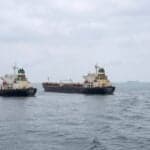


Senior officials from the United States and China have agreed that no country should be allowed to charge ships for passing through the Strait of Hormuz, according to the US State Department.
The comments were made ahead of an expected summit later this week between Donald Trump and Xi Jinping, where the situation in the Strait of Hormuz is expected to be discussed.
According to the State Department, Chinese Foreign Minister Wang Yi and US Secretary of State Marco Rubio discussed the issue during a phone call in April.
State Department spokesman Tommy Pigott told Reuters that both officials agreed that no country or organisation should be allowed to collect tolls from vessels using international waterways such as the Strait of Hormuz.
The department had not earlier released details of the Wang-Rubio call, which is unusual as such conversations are normally summarised publicly.
Tensions continue in the region after joint Israeli-US airstrikes on Iran on February 28. Iran’s near-complete closure of the Strait of Hormuz since the strikes has affected global energy markets.
Before the conflict, the strait handled around one-fifth of the world’s oil and gas supplies, making it one of the most important shipping routes in the world.
China’s embassy in Washington did not deny the US account of the discussion. Embassy spokesperson Liu Pengyu said all sides should work together to restore normal traffic through the strait.
He said keeping the region safe and stable and ensuring free passage through the waterway was in the interest of the international community.
Iran has demanded the right to collect tolls from commercial shipping as part of conditions linked to ending the conflict. At the same time, the United States has imposed a naval blockade on Iran.
President Trump had earlier suggested that the US could impose its own transit fees or possibly work with Iran to collect tolls from vessels using the strait.
However, after criticism from both within the US and abroad, the White House later said Trump wanted the Strait of Hormuz reopened to normal traffic without restrictions.
Chinese officials have avoided directly commenting on the issue of tolls, although Beijing has criticised the US naval blockade.
Two sources familiar with the Wang-Rubio call said Rubio raised the possibility of Chinese vessels being forced to pay tolls.
The move was reportedly intended to encourage Beijing to pressure Tehran to reduce tensions and move towards negotiations with Washington.
China remains a major buyer of Iranian oil and maintains ties with Tehran. Trump has been urging China to use its influence over Iran during the crisis.
During a later meeting with Iran’s foreign minister, Wang said the international community shared concerns about restoring “normal and safe passage” through the Strait of Hormuz.
He also reiterated China’s support for Iran in protecting its sovereignty and national security.
Last month, China vetoed a US-backed resolution at the United Nations that called on countries to work together to protect commercial shipping in the Strait of Hormuz. Beijing argued the resolution was biased against Iran.
The move led US ambassador to the United Nations Mike Waltz to accuse China of allowing Iran to threaten the global economy.
The United States and Bahrain have since prepared another UN resolution calling on Iran to stop attacks and mining operations in the strait. Diplomats said China and Russia could again block the proposal if it is put to a vote.
The draft resolution also calls for an end to attempts to impose what it describes as illegal tolls on shipping traffic in the waterway.
China has also instructed its companies not to follow US sanctions targeting Chinese oil refineries accused of buying Iranian crude oil. The sanctions are part of Washington’s efforts to increase pressure on Tehran.
Strait of Hormuz is one of the world’s most strategically important shipping corridors.
The narrow waterway connects the Persian Gulf to the Gulf of Oman and the Arabian Sea, serving as a key export route for crude oil, liquefied natural gas, and petroleum products from Gulf producers.
Any disruption to traffic through the strait can affect tanker operations, freight rates, marine insurance costs, and global energy prices.
Concerns over mining activity, naval blockades, and transit restrictions can also lead to rerouting pressure on commercial shipping and increased security risks for vessels operating in the region.
References: Reuters, iranintl
Want to read more?
Check out the full article on the original site