Chinese Supertanker Carrying 2 Million Barrels Of Iraqi Oil Makes Rare Exit From Strait Of Hormuz
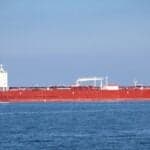


A Chinese-operated oil supertanker carrying nearly two million barrels of Iraqi crude has sailed out of the Strait of Hormuz and entered the Gulf of Oman, according to ship-tracking data.
The vessel, Yuan Hua Hu, passed Iran’s Larak Island on Wednesday and was later seen moving toward waters near an area where the United States has set up a blockade on Iranian-linked shipping activity.
The tanker is currently signalling Zhoushan in eastern China as its next destination and is expected to arrive on June 1, according to LSEG and Kpler tracking data.
The crossing comes ahead of expected talks between US President Donald Trump and Chinese President Xi Jinping.
Per reports, discussions are expected to include the conflict in the Middle East and China’s ties with Tehran.
The voyage is notable as it is only the third known transit by a Chinese very large crude carrier (VLCC) through the Strait of Hormuz since the conflict between the United States, Israel and Iran began on February 28.
According to shipping database Equasis, the vessel is owned and operated by units of COSCO Shipping.
Tracking data showed the tanker loaded Basrah Medium crude at Iraq’s Basrah terminal in early March before remaining inside Gulf waters for more than two months.
The ship was chartered by Unipec, the trading arm of Chinese state oil company Sinopec, according to shipping fixture data cited in the reports.
The tanker briefly anchored near the Gulf of Oman close to the area where the US Navy established a blockade on Iranian vessels earlier this week.
The vessel’s draft showed it was fully loaded or close to its carrying capacity of around two million barrels.
During the transit, the ship publicly identified itself as a Chinese-owned vessel with a Chinese crew through AIS transmissions.
Per reports, this has become a common safety measure for ships using the Tehran-approved route near Larak Island.
Another vessel, the vehicle carrier Xiang Jiang Kou, also passed through the strait within the last 12 hours while broadcasting the message “Chinese vessel and crew” on its public transponder, according to satellite analysis from SynMax and MarineTraffic data.
Reports said China’s private refiners have remained major buyers of Iranian crude for years, providing an important source of revenue for Tehran.
The United States has recently increased pressure on oil trade linked to Iran and China.
Per reports, Washington imposed sanctions on several entities involved in the trade, including Hengli Petrochemical Dalian Refinery Co Ltd. The company denied the allegations.
At the same time, reports said Iran has been working on oil and liquefied natural gas shipping agreements with Iraq and Pakistan as activity around the Strait of Hormuz continues to face growing pressure.
Other countries are also exploring similar arrangements, according to sources cited in the reports.
Ship-tracking firms have reported unusual tanker movements near the Gulf of Oman in recent days, including vessels making u-turns and failed crossing attempts.
Monitoring vessel activity in the region has also become more difficult because of electronic interference and AIS spoofing, which can affect ship position data. Some captains have also turned off vessel transponders for security reasons.
It remains unclear whether the Yuan Hua Hu will complete its journey through the US enforcement area without disruption.
References: Reuters, Bloomberg
Want to read more?
Check out the full article on the original site