World’s Longest Endurance Drone Submarine Can Scan Hormuz Strait For Naval Mines In 24 Hours
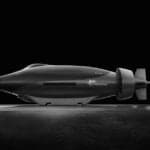


A European defence technology company has revealed the world’s largest, longest-endurance unmanned submarine which can remain underwater for 4 months without needing a support ship.
Constructed by Bremen-based Euroatlas, Greyshark is an autonomous underwater vehicle (AUV) which can undertake missions to safeguard subsea cables, energy pipelines, and other underwater infrastructure in contested regions.
It uses hydrogen fuel-cell propulsion, allowing it to operate for 16 weeks continuously.
The AUv can conduct monitoring missions while reducing the need for manned ships for such missions, especially in high-risk environments.
The vessel features 17 sensors that can generate clear seabed images with a resolution of 1.6 inches per pixel to identify underwater hazards.
It can travel up to 1000 nm at 10 knots or 10,700 nm at slower speeds of 4 knots.
The submarine can travel to the areas, detect and report objects and even complete mine warfare operations independently.
Verineia Codrean, Euroatlas’ head of strategy and special projects, said that a potential deployment region for Greyshark is the Strait of Hormuz, where it could help identify the location of mines laid by Iran in April 2026, but then struggles to find.
Codrean added that since Iran does not know the mines’ location, clearing the Strait could be dangerous and risk the lives of the crew.
Codrean also stated that just 6 Greyshark vehicles, operated by a single person, could map the entire Strait of Hormuz in 24 hours and could find the hidden mines, without risking any lives and relatively faster than any manned ship.
Another use of the drone submarine is the detection of narco-submarines built by powerful drug cartels to transport cocaine from South to North America and Europe while avoiding authorities.
The submarine can employ multiple sensors and swarm capabilities at once, allowing it to complete its missions quickly.
Sensor fusion enables the vessel to gather more data from the nearby environment.
Experts are positive that this technology could alter underwater operations, and it has garnered interest from NATO nations.
The submarine will undergo trials in August 2026, where the company will test its endurance, navigation systems, and sensor capabilities.
Want to read more?
Check out the full article on the original site