Iran To Charge Service Fee For Ships Passing Through Strait Of Hormuz
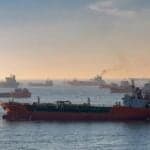


Iran will charge a service fee for ships passing through the Strait of Hormuz, said its Deputy Foreign Minister Kazem Gharidabadi.
According to his statement, the fee will cover charges for services like navigation support, pilotage, rescue operations, etc.
Additionally, Gharidabadi said that Iran would allow only selected ships from friendly countries to pass through and not all.
When questioned regarding the broader geopolitical situation, he said that it was the U.S. that wanted a ceasefire and not Iran, adding that they had agreed to talks eventually to find a diplomatic situation for a conflict that is affecting the entire world.
Iran’s Army spokesperson Brigadier General Mohammad Akraminia stated that the transport of U.S weapons via the Hormuz will not be allowed from now onwards.
“From now on, we will not allow American weapons to transit the Strait of Hormuz and enter regional bases,” Akraminia said.
Reports have suggested that Iran’s proposed service fee could reach up to $2 million per voyage for ships with charges of around $1 per barrel for larger tanker ships.
Gharidabadi said that a protocol would be put in place so that the fee is collected transparently and the ships can pass through the Strait and the Gulf safely.
Iran is also selecting which vessels will be permitted to pass first, specifically stating ‘friendly countries’ like India.
Recently, 11 Indian Ships were allowed to transit the Strait of Hormuz after Tehran’s leadership thanked India for its aid and support from its people amid the ongoing crisis in the country and a blockade of its ports by the U.S Navy.
The fees are being termed as a kind of rent or compensation for costs aimed to creating a continuous and stable revenue stream beyond oil exports.
The move has faced opposition from the U.S, which maintains the strategic waterway must remain open and free for all, as the Iranian decision risks shipping and outlines that international waterways are no longer free for all.
The news has created tension among global energy suppliers as 20% of the world’s oil and gas travels through the Strait of Hormuz.
Want to read more?
Check out the full article on the original site