Indian Navy Escorts 15th LPG Carrier From Strait Of Hormuz As Gulf Shipping Risks Rise
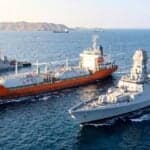


The LPG tanker MV Sunshine has safely crossed the Strait of Hormuz and is heading towards India with support from the Indian Navy and several Indian agencies amid continuing tensions in West Asia.
The vessel became the 15th India-bound LPG carrier to safely move out of the Persian Gulf during the ongoing regional uncertainty linked to tensions involving Iran and the United States.
According to sources quoted by ANI, Indian authorities closely monitored the movement of the vessel and coordinated support to ensure its safe transit through the sensitive shipping route.
Officials added that the Indian Navy provided necessary support and escort during the operation.
Marine tracking data showed the vessel moving into safer waters towards the Arabian Sea after crossing Hormuz. The ship is carrying LPG cargo and is expected to arrive at Indian ports for discharge.
Government sources said all 15 India-linked LPG vessels that were operating in the Persian Gulf have now successfully moved out of the region through multi-agency coordination involving the Indian government, the Ministry of Ports, Shipping and Waterways, the Ministry of External Affairs, and the Indian Navy.
Earlier vessels that reportedly crossed the route included Green Sanvi, Nanda Devi, Shivalik and Pine Gas.
The Strait of Hormuz remains one of the world’s most important shipping routes for oil and gas trade.
A large share of global energy supplies passes through the narrow waterway connecting the Persian Gulf with international markets.
Concerns over vessel safety in the region have increased due to the ongoing tensions involving Iran and the United States.
The Indian Navy has maintained an active operational presence in the region, increasing surveillance and maritime security measures for merchant shipping amid increased risks to international trade routes.
Iran’s Deputy Foreign Minister for Legal and International Affairs, Kazem Gharibabadi, said the situation in the Strait of Hormuz would improve if peace was restored in the region.
Speaking in New Delhi ahead of the BRICS Foreign Ministers’ meeting, Gharibabadi said there would be “more safety and security than before” once peace was established. He also said Iran would act within international law and there would be transparency in the region.
The Iranian official also criticised the United States, saying Washington was not involved in “serious diplomacy”.
He said Iran would welcome any diplomatic effort by India aimed at reducing tensions in West Asia.
Gharibabadi described India and Iran as “two nations with one culture” and referred to the cultural and people-to-people ties between the two countries.
Global energy markets remain sensitive to any disruption in Hormuz traffic.
The International Energy Agency warned that global oil supply could decline sharply in 2026 due to the conflict and shipping bottlenecks linked to the Strait of Hormuz.
Brent crude prices remained around $108 per barrel following concerns over restricted shipping access through the route.
The developments also coincided with US President Donald Trump arriving in Beijing for talks with Chinese President Xi Jinping, where the Iran conflict and shipping disruptions were expected to be discussed.
Before leaving for China, Trump said the United States did not need Beijing’s help to deal with Iran or restore normal shipping movement through Hormuz.
Strait of Hormuz
The Strait of Hormuz is one of the world’s most critical maritime chokepoints for energy trade.
The narrow sea route connects the Persian Gulf to international shipping lanes through the Gulf of Oman and the Arabian Sea.
Around one-fifth of global oil supplies normally transit through the passage, along with major volumes of liquefied petroleum gas (LPG) exports from Gulf producers.
Any disruption to vessel movement through Hormuz can affect global shipping schedules, freight costs, insurance rates, and international energy prices.
Naval escorts and maritime surveillance operations are often increased during periods of regional tension to protect commercial shipping traffic.
Indian authorities have not reported any immediate impact on the country’s LPG supplies after the vessels safely moved out of the Persian Gulf.
However, security conditions in the region continue to be closely monitored as tensions remain unresolved.
References: The Statesman, Firstpost
Want to read more?
Check out the full article on the original site