India To Build One Of The World’s Deepest Gas Pipelines Worth $4.8 Billion To Secure Energy Supplies From Gulf
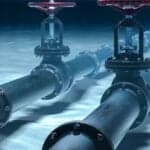


India is planning to build a $4.8 billion or INR 40,000 crore deep-sea gas pipeline, which will connect Oman directly to the country’s Gujarat coast, a petroleum ministry official revealed to local media.
Once approved by the government, it will take 5-7 years to complete the project. The necessity of such an infrastructure stems from the current geopolitical situation, where Iran closed a critical energy supply route, the Strait of Hormuz, due to the U.S-Iran war.
In order to keep its energy security intact, India has decided to go ahead with this project, which will allow the country to directly buy Oil from Oman, UAE, Iran, Saudi Arabia, Turkmenistan and Qatar.
India does not maintain gas reserves, as it does for oil, making gas supply disruptions even more critical for the country.
The 20,000 km long deep-sea pipeline, which will be one of the deepest of its kind in the world, will boast a capacity of 31 MMSCMD and a depth of 3450 m.
It will be a dedicated pipeline that passes through the Arabian Sea through Oman and the UAE while avoiding sensitive regions or critical maritime chokepoints, so if any conflict arises, India can continue to receive its energy supplies.
The Indian Petroleum Ministry has directed the state-operated GAIL, Engineers India and Indian Oil Corp to present a feasibility report for the project.
The authorities are currently working and planning based on a pre-feasibility study that was submitted by the South Asian Gas Enterprise, or SAGE, a private sector consortium based in New Delhi.
Officials believe that a gas pipeline from West Asia gives India a stable, cost-competitive gas without depending on any other country or a maritime chokepoint.
ICICI Direct research stated that the proposed India-Oman gas pipeline is a great opportunity for India’s EPC, industrial pipe manufacturing network and offshore engineering companies, given its $4.8 billion capex and technical complexity.
“Offshore EPC players with subsea execution capabilities, such as Larsen & Toubro, are likely to be key beneficiaries across engineering, procurement and offshore construction activities.
Engineers India could benefit from feasibility studies, FEED engineering and project management consultancy assignments,” it added.
Approximately 80 to 85% of India’s LPG imports pass through the Hormuz Strait.
Since peace negotiations between the U.S. and Iran remain deadlocked, tensions around the Hormuz continue as 20,000 seafarers and billions worth of oil remain stuck in the waterway.
Amidst this, there are also reports of Iran confirming a service fee plan for charging vessels a fee for passing through the Hormuz.
Want to read more?
Check out the full article on the original site