Piracy Off Somalia Rises Again As Iran-U.S War Forces Ships To Take Dangerous Detours Around Africa
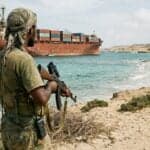


The U.S-Iran war has led to a resurgence of maritime piracy in Somalia as commercial ships are forced to take lengthy detours around Africa’s southern tip.
This has not only increased travel times by weeks and raised expenses by an additional $1 million per vessel, but also forced ships into the dangerous Somali basin.
Pirate networks have remobilised to take advantage of the increased maritime traffic and are reportedly joining hands with Yemen’s Houthis.
This resurgence in Somali Piracy was confirmed by a May 12 advisory from the United Kingdom Maritime Trade Operations (UKMTO).
Somali pirates are presently holding two oil tankers and a general cargo/cement carrier, which were captured between April 21 and May 2, including one vessel which was hijacked off Yemen and then brought to Somalia.
UKMTO has warned that the “piracy threat level remains severe” along the coast of Somalia, which was a hotspot for maritime piracy incidents in the 2000s, which peaked in 2011 with a record of 237 incidents that cost $7 billion.
More than 4000 seafarers faced attacks involving rifles and grenades during that year.
These incidents are a result of extreme poverty in the region, especially Somalia, which has forced the youth to join terror groups or pick up arms to feed their families.
Since the 1990s, Somalia has not had a functioning central government, and corruption has been rampant. People starved, and no jobs or resources were available to them, which pushed them to piracy, theft, robbery, etc.
The situation worsened when they realised shipping companies would agree to pay millions in ransom to release the ships and the crew members.
Manu Lekunze, an international relations lecturer at the University of Aberdeen in Scotland, explained that the U.S-Iran war in the Middle East had created a ‘security vacuum’ which led to a resurgence of maritime piracy in Africa.
Naval ships, which had usually patrolled the Somali waters to keep pirates at bay, were now assigned to escort commercial ships through the Strait of Hormuz, which was closed by Iran after the U.S. and Israel launched strikes against the country on February 28, 2026.
He said, “Redeployment from the region to concentrate forces in the Persian Gulf has created opportunities, activating networks that can execute specific pirate missions.”
This is evident from the fact that only a handful of such incidents happened in 2025, according to the ICC International Maritime Bureau report.
The European Union’s naval force, Operation Atalanta, also acknowledged this while mentioning that it recently freed an Iranian-flagged ship off Somali after forcing the pirates who hijacked it to retreat.
The naval force has been patrolling the Somali waters for two decades now and has advised vessels to maintain heightened vigilance while training in these volatile waters and report any suspicious activities.
Somali lawmaker Mohamed Dini said that the resurgence of piracy in Somalia is due to a combination of internal and external factors.
Dini said that long-term domestic instability has weakened local institutions, allowing pirates to operate without any fear.
Those behind recent hijackings have yet to be identified, but previous piracy attacks often involved young men from poor communities and armed extremists.
The European Union Naval Force said that at present, 3 pirate groups are active in northern Somalia, which have the necessary resources to threaten ships in the region.
Want to read more?
Check out the full article on the original site