New Autonomous Warship Concept Could Transform North Atlantic Naval Patrol Operations
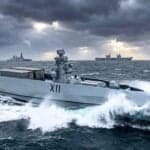


Spanish shipbuilder Navantia has revealed a new autonomous warship concept designed to support the UK Royal Navy’s future “hybrid navy” strategy, which combines crewed warships with uncrewed and autonomous vessels.
The new vessel, called LASV75, was developed by Navantia UK and unveiled during the Combined Naval Event (CNE) 2026.
The 75-metre-long vessel is designed to operate without any crew onboard and could carry out missions including surveillance, escort duties, electronic warfare and strike operations depending on its equipment configuration.
Navantia UK said the LASV75 was created to meet future Royal Navy and allied naval requirements, especially for long-duration operations in the North Atlantic.
The company said the vessel could help protect undersea infrastructure such as cables and pipelines and support missions aimed at tracking submarines.
The concept is also linked to the Royal Navy’s proposed “Type 92” programme, which envisions a fleet of autonomous vessels patrolling the North Atlantic to improve continuous maritime coverage.
Currently, these duties are carried out by Type 23 frigates and will later shift to the Type 26 frigates.
The LASV75 is about half the size of a Royal Navy Type 45 destroyer and has a displacement of more than 1,000 tonnes.
Unlike traditional warships, it has no bridge, crew accommodation or onboard support systems, allowing more space for mission payloads and longer operational endurance.
Models displayed by Navantia UK showed the vessel carrying containerised mission systems, allowing it to quickly switch between different operational roles.
The company said the ship is being designed with NATO-compatible interfaces to improve interoperability with allied navies.
Simon Jones, product development director at Navantia UK, said the vessel was designed by the company’s Bristol-based team as part of efforts to support the future hybrid navy concept.
“To have true persistent capability in the North Atlantic, especially in harsh weather conditions, we believe something of this scale is needed,” Jones said.
The vessel uses an Integrated Full Electric Power and Propulsion (IFEP) system, where diesel generators power electric motors and onboard systems. Navantia said the ship uses waterline exhaust systems instead of traditional funnels.
The company added that the LASV75’s modular design allows operators to customise weapons, sensors, engineering systems and power arrangements depending on mission requirements.
Navantia UK said the vessel is intended to be built faster and at a significantly lower cost than conventional crewed warships, although the company did not provide exact figures.
The company said it is investing £157 million across its shipyards in Appledore, Arnish, Belfast and Methil to modernise facilities and introduce digital shipbuilding technologies.
According to Navantia UK, these upgrades could reduce the time needed to design and build large naval vessels by up to 30%.
Future LASV75 vessels would initially be built at the company’s Appledore shipyard in Devon, which can handle ships up to 120 metres long.
Navantia UK is also continuing work on the UK’s Fleet Solid Support programme for the Royal Fleet Auxiliary.
The company cut first steel for the first support vessel in December 2025, while an 85-metre transport barge was launched earlier this month to move ship blocks and components between Appledore and Belfast.
References: The Register, Naval Today
Want to read more?
Check out the full article on the original site