India-Bound LNG Tanker Crosses Strait Of Hormuz For First Time Since US-Iran War Began
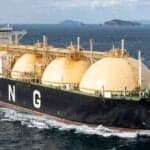


A liquefied natural gas (LNG) tanker carrying cargo for India has crossed the Strait of Hormuz for the first time since the Iran war disrupted shipping in the region months ago, according to Bloomberg and Reuters.
The vessel, identified as the 136,357-cubic-metre LNG tanker Mubaraz, managed by ADNOC Logistics & Services, was tracked heading toward India’s west coast after loading cargo from Abu Dhabi National Oil Co.’s Das Island export terminal inside the Persian Gulf.
The Strait of Hormuz normally handles roughly a fifth of global LNG supply, but traffic through the waterway has sharply declined since the Iran conflict began earlier this year.
Tanker operators, charterers and Asian buyers have been closely monitoring whether Gulf exporters could safely resume shipments through the corridor amid continuing security threats and unofficial restrictions on vessel movements.
Ship-tracking data cited by Reuters showed the tanker was last seen in the Gulf on March 30 before reappearing near India.
Bloomberg reported that the vessel stopped transmitting its AIS tracking signal near Hormuz and loaded cargo during that period.
Satellite images also showed LNG tankers docking at Das Island even though no vessels were broadcasting positions near the terminal.
According to Bloomberg, Abu Dhabi National Oil Company has also exported two other LNG cargoes from the Persian Gulf during the conflict period, one to Japan and another to China.
The tankers also reportedly switched off tracking signals while passing through Hormuz.
The Strait of Hormuz has remained heavily restricted as the United States and Iran continue struggling to reach a peace agreement.
Most LNG tankers crossing the route are travelling with transponders turned off because of security concerns.
Before the conflict, around three LNG tankers passed through Hormuz every day. Current cargo movements remain far below normal levels.
India has been among the countries most affected by the disruption. More than half of India’s LNG imports last year came from Qatar and the UAE, but those supplies have largely slowed in recent months.
The decline forced Indian buyers to purchase more expensive spot cargoes and reduce supplies to some industries.
Alex Froley, senior LNG analyst at ICIS, told Reuters the tanker crossing should be seen as only an early positive sign for the market. “If the tanker has crossed, it would be a hopeful sign for the gas market, but only a very early one.”
The successful transit does not mean shipping conditions in Hormuz have returned to normal.
Traders, insurers and shipping companies are still closely watching whether more LNG cargoes can safely pass through the route.
Reuters also cited ADNOC Chief Executive Sultan Al Jaber as saying full oil flows through the region may not return before 2027.
References: Bloomberg, scramnews
Want to read more?
Check out the full article on the original site