U.K Navy Awaits US-Iran Peace Deal To Clear Naval Mines In Strait Of Hormuz
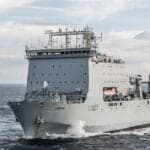


Hundreds of British Sailors onboard the RFA Lyme Bay are awaiting the official signing of the peace agreement between the US and Iran before they are deployed for a mine-clearing operation in the Strait of Hormuz.
U.s President Donald Trump has expressed his dissatisfaction at the allies not doing enough to support Washington in its war against Iran.
In March, Trump had told NATO allies to “go get your own oil” and secure the Strait themselves.
However, now at the southern end of the Iberian Peninsula in the British Overseas Territory of Gibraltar, the UK’s Royal Navy is making necessary preparations for doing just that, however, only after a deal is reached.
Though Trump had said that a deal with Iran had been “largely negotiated”, it needs to be officially signed.
U.K. Armed Forces Minister Al Carns took a few reporters aboard the RFA Lyme Bay as it was being loaded with mine-hunting drones, sonar systems, and ammunition for a risky international operation led by the U.K. and France to clear the Strait of Hormuz of Iranian mines.
If everything happens as planned, the RFA Lyme Bay will leave Gibraltar and meet the UK destroyer HMS Dragon and other allied vessels for air support before sailing through the Suez Canal to the Persian Gulf.
“Which other country can pull together 40 nations and come up with a solution to deal with a complex problem that we couldn’t predict because we weren’t involved?” asked Carns, responding to a question about what Trump wants from his British ally.
The Strait of Hormuz was effectively closed to shipping after the U.S. and Israel launched strikes against Iran on February 28, 2026, and the latter retaliated by attacking U.S bases in the neighbouring Gulf countries, striking Israel and closing the strategic waterway, which sent global oil prices up.
Per reports, over 6500 ships have been blocked from transiting through the Strait of Hormuz since the war began.
The dangerous detours around Africa have not only cost time and money but also led to a resurgence in piracy-related incidents near Somalia.
Cmdr. Gemma Britton, in charge of the Royal Navy’s Mine and Threat Exploitation Group, said that Iran could have deployed hundreds of mines in the strait, which could be rocket-propelled, cabled or could be sitting on the seabed, ready to be activated by the slightest movement, sound or light.
Britton also added that RFA Lyme Bay is carrying an ROV that can dive and drop a charge near a mine before setting it off.
The mission will employ sea drones equipped with sonar to generate images of underwater objects, which will help identify mines.
After a mine has been found, a diver carrying explosives places a charge on the mine and swims away before detonating it.
Want to read more?
Check out the full article on the original site