U.S. Navy Quietly Escorts Oil Tankers Through Strait Of Hormuz Amid Rising Gulf Shipping Risks
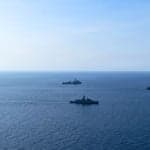


The United States Navy has been quietly helping commercial ships pass through the Strait of Hormuz, according to US military officials cited by The Wall Street Journal.
Officials said a Greek supertanker carrying about two million barrels of crude oil was recently escorted through the waterway off Oman with US Navy assistance.
The vessel had been stranded in the Gulf region since early March and is now heading to India to deliver its cargo.
The Strait of Hormuz is a key global shipping route used for oil and energy trade. Any disruption in the area can affect oil prices, shipping operations and marine insurance costs.
According to the report, the US Navy is expected to assist around a dozen vessels, including supertankers and container ships, in crossing the strait over the coming days.
Earlier this month, the US had launched an initiative called “Project Freedom” to help coordinate safe passage for commercial ships through the region.
However, the operation was suspended about 36 hours later after Iran launched attacks on vessels in the area. Saudi Arabia also restricted US access to military bases and airspace during the period.
A spokesperson for US Central Command denied reports that Project Freedom had officially resumed.
“The US wasn’t resuming Project Freedom and that reporting that said it was picking back up is inaccurate,” the spokesperson said.
Despite this, US officials said naval support for commercial shipping is continuing on a smaller and more selective basis.
The United States and Iran continue discussions linked to a possible extension of the ceasefire and negotiations over Iran’s nuclear programme.
According to Japan’s Nikkei, citing a Middle East diplomatic source, the two countries are discussing a plan to reopen the Strait of Hormuz around 30 days after any agreement to end hostilities is reached.
Under the reported proposal, Iran would begin clearing mines from the waterway during that period.
After that, commercial vessels from all countries would be allowed to pass through the strait safely, while Iran would stop collecting transit fees.
Nikkei also reported that a ceasefire agreed earlier in April could be extended by 60 days while talks continue.
The report said Iran had effectively closed the Strait of Hormuz following US-Israeli attacks on Iran that reportedly began on February 28. Thousands of vessels were left stranded in the Gulf during the disruption.
Iran has also strengthened its position in the area. The Persian Gulf Strait Authority published a map claiming control over a large section of waters around the strategic chokepoint.
US President Donald Trump said on Sunday that he had instructed negotiators not to rush into any agreement with Iran.
References: moneycontrol, timesofisrael
Want to read more?
Check out the full article on the original site