10 Best Data Science Courses for Beginners in 2026
You're probably researching the best data science courses because you know one of them could change your career trajectory. But choosing the right one is genuinely frustrating. Dozens of options promise results, and nobody explains which one actually fits your specific situation.
Some data science courses are free, some cost less than \$100 or more than \$1,000. Some take three months, others take over a year. The question you should be asking is: which course will actually help me become a working data scientist?
This guide will help you find the answer to that question. We'll show you the best data science courses based on where you are and where you're heading. More importantly, we'll help you figure out which course aligns with your specific goals, budget, and timeline.
In this guide, you'll learn:
- How to choose a data science course that matches your starting point
- Which courses are the best for absolute beginners
- Which courses are the best for analysts moving into modeling
- Which courses are the best for free, academic, or ML-focused learning
- How to turn any course into a portfolio that lands interviews
Let's find the right course for you.
Top Picks by Goal
Want the short version? Here's the best data science course for each common learner goal.
- Best overall for beginners: Dataquest Data Scientist in Python — hands-on, project-heavy foundation with 27 projects
- Best recognizable certificate: IBM Data Science Professional Certificate (Coursera)
- Best for analysts moving into modeling: Google Advanced Data Analytics Certificate
- Best ML foundation after Python basics: DeepLearning.AI Machine Learning Specialization
- Best free option: Kaggle Learn micro-courses
If any of these match your situation, jump to that section. If you're not sure yet, the full comparison table and detailed reviews below will help you narrow it down.
Top Data Science Courses Compared at a Glance
There is no perfect course for every learner. The best one for you depends on where you're starting from, how much time you can commit, whether you need a specific certificate, and what you want to build at the end.
The table below ranks all 10 courses by how well they serve a beginner who wants a complete data science foundation plus real portfolio work. Each entry includes who it's for and who should skip it.
| # | Course | Best for | Level | Time | Cost model | Project output | Avoid if |
|---|---|---|---|---|---|---|---|
| 1 | Dataquest Data Scientist in Python | Beginners who want a hands-on, project-heavy foundation | Beginner | 11 months at 5 hrs/week | Premium plan \$49/mo | 27 projects, 38 courses | You want video-first learning or a short certificate |
| 2 | IBM Data Science Professional Certificate | Recognizable beginner certificate | Beginner | ~4 months at 10 hrs/week | Coursera subscription \$35/mo | Capstone + portfolio prompts | You need extensive hands-on volume inside the course |
| 3 | DataCamp Associate Data Scientist in Python | Bite-sized interactive practice | Beginner | ~90 hours | DataCamp subscription \$19/mo | Guided exercises | You need a deeper portfolio-first path |
| 4 | Google Advanced Data Analytics Certificate | Analysts moving into modeling | Intermediate | 6 months | Coursera subscription \$35/mo | Capstone-style projects | You have no analytics background yet |
| 5 | HarvardX Data Science Professional Certificate | R and statistics rigor | Beginner to intermediate | ~17 months | edX certificate fees \$1,332.90 – \$1,481 | Course-level assessments | You want a Python-first, job-portfolio path |
| 6 | UMich Applied Data Science with Python | Applied Python specialization | Intermediate | ~3 months at 10 hrs/week | Coursera subscription \$35/mo | Course assignments | You're starting Python from absolute zero |
| 7 | MIT 6.0002 Introduction to Computational Thinking and Data Science | Free university-style foundation | Beginner with some programming | Self-paced lectures | Free | Self-directed exercises | You need structure, feedback, or guided projects |
| 8 | DeepLearning.AI Machine Learning Specialization | ML foundation after Python basics | Beginner to intermediate | ~95 hours | Coursera subscription \$35/mo | Graded ML labs | You need a full data science curriculum |
| 9 | Kaggle Learn micro-courses | Free practice supplement | Beginner | Varies (3+ hours per micro-course) | Free | Notebook-based exercises | You need a structured roadmap |
| 10 | Python for Data Science and ML Bootcamp (Udemy) | Budget video option | Beginner with some programming | ~25 hours | Udemy course price \$7.50 – \$10 | Self-driven exercises | You need feedback, community, or current curriculum |
How we ranked these data science courses
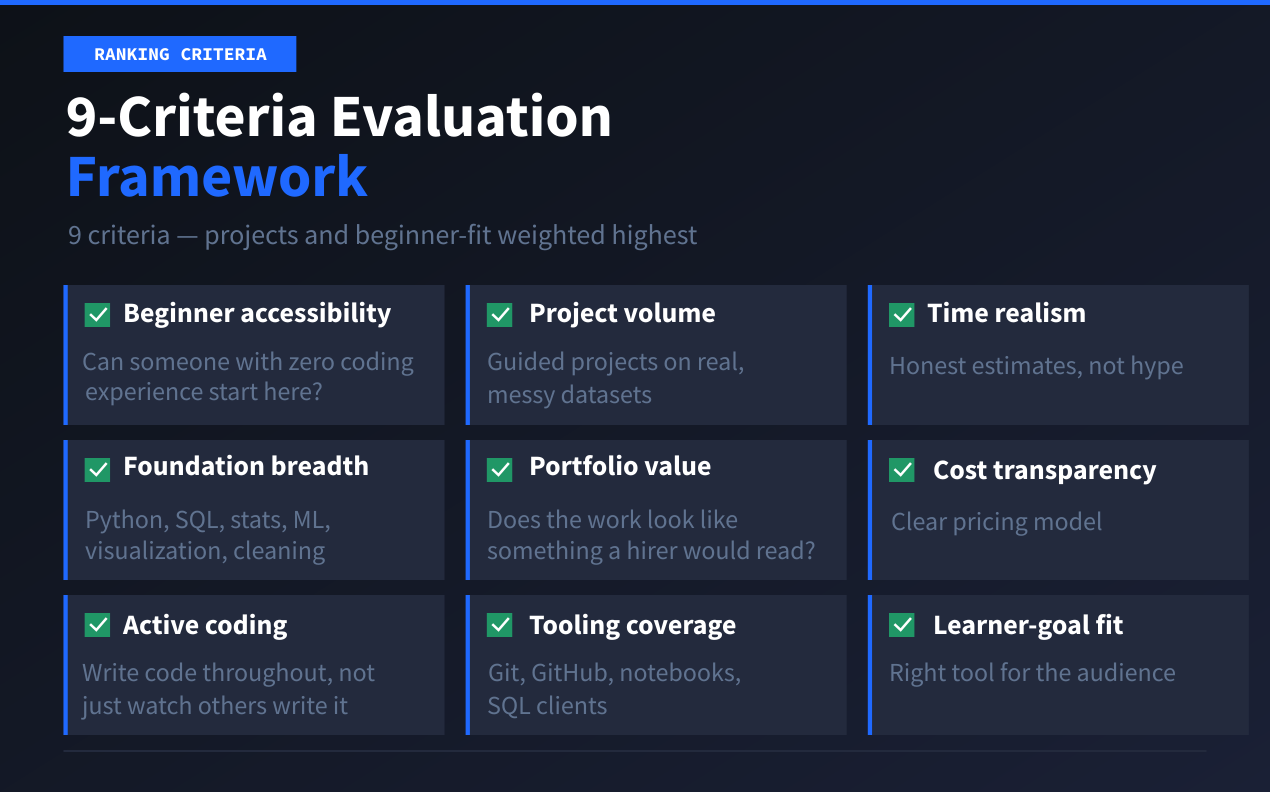
The rankings here are not based on enrollment size or brand recognition. They're based on what learners actually need to land their first data role, with project work weighted higher than certificate prestige.
We scored each course against nine criteria — beginner accessibility, foundation breadth, active coding, project volume, portfolio value, tooling coverage, time realism, cost transparency, and learner-goal fit.
Dataquest scored highest on the combination of beginner fit and hands-on project output, which is why it leads this list. Certificate-first options like IBM and Google ranked lower under this framework, not because they're weak, but because their value depends heavily on what you build after you finish.
#1 Best overall for beginners: Dataquest Data Scientist in Python Certificate Program
Best for: Beginners who want a complete hands-on foundation plus 27 real-world projects to put on GitHub.
The Dataquest Data Scientist in Python path is built for learners who are starting close to zero and want a single structured path to a job-relevant skill set. The 11-month timeline isn't a marketing number — the path is genuinely that long because data science is genuinely that broad.
- Prerequisites: None. Starts from no coding experience
- Format: Interactive in-browser coding, self-paced
- Skills covered: Python, pandas, NumPy, Matplotlib, SQL, web scraping, statistics, machine learning, deep learning fundamentals, command line, Git, GitHub
- Curriculum: 38 courses across Python foundations, data cleaning, EDA, SQL, statistics, machine learning, and deep learning, with 27 guided portfolio projects built on real business datasets
Strengths
- Beginner-friendly start from zero coding experience
- 27 real-world projects that double as portfolio starters on GitHub
- Active in-browser coding with immediate feedback on every lesson
- Honest, realistic time estimate that matches the genuine breadth of the field
Weaknesses
- Self-paced format demands consistency. It works less well for learners who need external deadlines
- No long video lectures (a downside if video is your preferred learning format)
- No university-branded credential
Why this ranks #1
| What you practice | Portfolio signal |
|---|---|
| Python and notebooks | You can write and explain code |
| Data cleaning and EDA | You can work with messy data |
| SQL | You can query real databases |
| Visualization | You can communicate insights |
| Machine learning | You can build and evaluate models |
| Git/GitHub | You can organize and share work |
Wrong for you if: You prefer a video-first learning format, you want a short certificate you can finish in a few weeks, or you specifically need a university-branded credential for your résumé or visa application. Dataquest is project-heavy and self-paced, which works well when you show up consistently. It works less well if you need video lectures or short-term certificate validation.
#2 Best recognizable beginner certificate: IBM Data Science Professional Certificate
The IBM Data Science Professional Certificate on Coursera is one of the most-cited beginner data science certificates online. It pairs structured pacing with the brand recognition of IBM and Coursera, which still carries weight in many HR systems.
- Prerequisites: None
- Format: Video lectures, quizzes, and a capstone project on Coursera
- Skills covered: Python, SQL, data visualization, machine learning fundamentals, and a capstone project
- Curriculum: 12 self-contained courses ending in a final capstone
Strengths
- Recognized IBM and Coursera credentials
- Well-structured beginner pacing across 12 courses
- Familiar Coursera platform with subtitles, mobile access, and certificate sharing
Weaknesses
- Heavier on theory and quizzes than on independent project work
- Reddit feedback from past learners notes that it can feel theoretical without supplementary projects
- Limited exposure to messy real-world datasets inside the course itself
If you pick this one, plan to add at least two independent projects to your portfolio after the capstone. Use the course to learn the foundations, then use your own projects to prove what you can actually build with your skills.
Wrong for you if: You need extensive hands-on project volume inside the course itself, or you want to spend more time writing code than watching explanations.
#3 Best interactive coding practice: DataCamp Associate Data Scientist in Python
The DataCamp Associate Data Scientist in Python track is built around short, in-browser exercises that drill specific Python and pandas patterns. The format works well for habit-building — 20 minutes during lunch is enough to complete an exercise and move forward.
- Prerequisites: None
- Format: Short in-browser interactive exercises bundled into a track of stand-alone courses
- Skills covered: Python, pandas, data manipulation, intro statistics, intro machine learning
- Curriculum: ~90 hours across a track assembled from multiple individual DataCamp courses
Strengths
- Bite-sized exercises fit into short study blocks for consistent practice
- Immediate auto-graded feedback builds beginner confidence
- Low barrier to entry. No prerequisites and a fast first lesson
Weaknesses
- Exercises are heavily scaffolded. The platform fills in much of the surrounding code so you can focus on one concept at a time, which limits blank-notebook practice
- Tracks are assembled from individual courses, so the learning path can feel like a sequence of related modules rather than one fully integrated curriculum, with small gaps or repetitions between topics
- Limited portfolio output. You'll need to build independent projects to prove applied skills
If you use DataCamp, pair it with at least one or two independent projects where you start from a blank file and a raw dataset. That bridges the gap between scaffolded practice and the kind of work that lands interviews.
Interactive practice vs. portfolio work
| What you practice | Portfolio signal |
|---|---|
| Python and notebooks | You can write and explain code |
| Data cleaning and EDA | You can work with messy data |
| SQL | You can query real databases |
| Visualization | You can communicate insights |
| Machine learning | You can build and evaluate models |
| Git/GitHub | You can organize and share work |
Wrong for you if: You need a deeper portfolio-first path as your primary structure, rather than as a supplement.
#4 Best for analysts moving into modeling: Google Advanced Data Analytics Certificate
The Google Advanced Data Analytics Certificate is the explicit next step after Google's beginner Data Analytics Certificate. It picks up where analytics fundamentals leave off and pushes you toward statistical modeling and machine learning.
- Prerequisites: Analytics fundamentals — SQL, spreadsheets, basic visualization, business framing (this is the level you'd reach after the beginner Google Data Analytics Certificate)
- Format: Video lessons, readings, and portfolio-style projects on Coursera
- Skills covered: Statistics, Python, regression, machine learning, Tableau
- Curriculum: 7 courses with portfolio-style projects at each stage
Strengths
- Picks up cleanly from analytics fundamentals
- Strong modeling and statistics coverage with applied projects
- Portfolio-style assessments built into each course
Weaknesses
- Assumes prior analytics or coding background — wrong starting point for true beginners
- Statistics and regression material moves quickly for anyone who hasn't touched these before
- Less interactive Python coding than dedicated coding-practice platforms
#5 Best academic R/statistics path: HarvardX Data Science Professional Certificate
The HarvardX Data Science Professional Certificate on edX is a long, academically structured program taught by Rafael Irizarry, a working biostatistician. The statistical content is genuinely strong, and the R-first orientation is a feature for biostats and research-adjacent careers.
- Prerequisites: None formally. Moderate math comfort helps
- Format: Self-paced edX courses with assessments and a Harvard-associated credential
- Skills covered: R, probability, statistics, regression, machine learning, Git, Unix
- Curriculum: 9 courses across R foundations, statistics, modeling, and productivity tools
Strengths
- Strong statistical rigor. One of the best stats-grounded online programs
- University-associated credential that carries weight in academic and research circles
- Taught by a working biostatistician with real research experience
Weaknesses
- R-first orientation doesn't match most industry job listings, which name Python
- Long completion timeline (~17 months). Best suited to learners who can commit for the long haul
- Less project portfolio output geared toward tech-industry hiring
R-first vs. Python-first paths
| R-first (HarvardX) | Python-first (most industry roles) | |
|---|---|---|
| Primary language | R | Python |
| Strong for | Statistical modeling, biostats, research | Industry data science, ML engineering, AI |
| Job market signal | Healthcare, research, academia | Tech, finance, e-commerce, most data science roles |
| Common stack | tidyverse, ggplot2, caret | pandas, NumPy, scikit-learn, PyTorch |
Wrong for you if: You want a faster, Python-first path with applied projects you can immediately put on GitHub for a tech-industry job search.
#6 Best applied Python specialization: University of Michigan Applied Data Science with Python
The University of Michigan Applied Data Science with Python specialization on Coursera is a focused applied toolkit for learners who already have Python basics. It works well as a second or third learning step rather than a starting point.
- Prerequisites: Introductory Python required. Comfort with loops, functions, and list comprehensions from lesson one
- Format: Self-paced Coursera courses with graded assignments
- Skills covered: pandas, Matplotlib, scikit-learn, NLTK, networkx
- Curriculum: 5 courses covering data manipulation, plotting, machine learning, text mining, and network analysis
Strengths
- Strong applied Python toolkit with useful breadth across niche areas (text, networks)
- Solid pacing for learners who already have Python basics
- Coursera credential with the University of Michigan name attached
Weaknesses
- Assumes Python comfort from lesson one — wrong starting point for zero-Python beginners
- Doesn't cover SQL or statistics in depth
- No portfolio development built into the specialization
Before you start: This specialization assumes you've completed an introductory Python course and can write basic loops, functions, and list comprehensions without help. If you're starting from zero, take a Python foundations course first.
Wrong for you if: You need to learn Python from absolute zero. Start with a foundations course first, then come back to this.
#7 Best free university foundation: MIT 6.0002 Introduction to Computational Thinking and Data Science
MIT 6.0002 Introduction to Computational Thinking and Data Science is freely available through MIT OpenCourseWare. The conceptual grounding in optimization and probability is the kind of foundation that pays off years later in your career.
- Prerequisites: Basic Python programming (typically MIT 6.0001 or equivalent)
- Format: Free recorded lectures, problem sets, recitations, and reading lists
- Skills covered: Computational models, simulation, probability, optimization, introduction to machine learning
- Curriculum: 15 sessions across roughly 8 weeks (two one-hour lectures per week), primarily in Python with NumPy and matplotlib
Strengths
- High-quality MIT-level academic content, completely free
- Strong conceptual foundations in optimization and probability
- Lectures from clear instructors with thoughtful problem sets
Weaknesses
- No structure, mentorship, or certificate of completion
- Course was filmed in 2016. Tooling and industry context have moved on, even though the foundational concepts haven't changed
- Self-directed format demands strong autonomy
Wrong for you if: You need structure, feedback, guided projects, or a credential to show on your résumé. This is a "pull" resource, not a "push" one.
#8 Best machine-learning foundation after Python basics: DeepLearning.AI Machine Learning Specialization
The DeepLearning.AI Machine Learning Specialization, co-developed with Stanford Online and taught by Andrew Ng, is widely regarded as one of the strongest introductory ML courses available. It's an ML course, not a full data science curriculum, so plan accordingly.
- Prerequisites: Python basics, basic statistics, and the ability to work with data
- Format: Video lectures with graded coding labs on Coursera
- Skills covered: Supervised learning, unsupervised learning, recommender systems, reinforcement learning
- Curriculum: 3 courses, approximately 95 hours of content total
Strengths
- Andrew Ng's explanations are clear and widely recommended across the industry
- Math is presented at a level most determined learners can follow
- Graded coding labs reinforce each concept with working code
Weaknesses
- It's an ML course, not a complete data science curriculum (no SQL, limited data cleaning, no broader analyst workflow)
- Assumes Python and basic statistics already — wrong starting point for true beginners
- Less portfolio-style end-to-end project work than full DS paths
Machine learning is one part of data science, not the whole. Plan to complete this after Python, SQL, statistics, and data cleaning fundamentals, not before them.
Wrong for you if: You're looking for your first complete data science path. Take this after you have Python and data basics covered, not as your starting point.
#9 Best free practice path: Kaggle Learn micro-courses
Kaggle Learn offers a series of free micro-courses, each focused on a single skill. Kaggle's Intro to Machine Learning micro-course lists 3 hours of content, and other micro-courses follow a similar short-form structure.
- Prerequisites: None for individual micro-courses (some assume Python basics)
- Format: Free, notebook-based exercises in the browser, plus public Kaggle competitions
- Skills covered: Python, pandas, data visualization, SQL, data cleaning, intro and intermediate machine learning
- Curriculum: ~10 standalone micro-courses of 3+ hours each, plus access to Kaggle competitions for additional practice
Strengths
- Completely free, with public Kaggle notebooks that double as portfolio exposure
- Topic-focused. Useful for filling specific skill gaps quickly
- Kaggle competitions add real practice on real, messy datasets
Weaknesses
- No coherent end-to-end roadmap. Micro-courses don't string together into one curriculum
- No mentorship, structured project review, or career guidance
- Best as a supplement, not as a primary learning path
Wrong for you if: You need a single full curriculum, feedback on your work, or a mentor-style structure. Use Kaggle alongside a course, not instead of one.
#10 Best budget video bootcamp: Python for Data Science and Machine Learning Bootcamp
The Python for Data Science and Machine Learning Bootcamp on Udemy is a video-based course that frequently sells for under \$15 during promotional periods. For learners on a tight budget who prefer the lecture-then-practice format, it works as a low-cost introduction.
- Prerequisites: None
- Format: Self-paced video course with companion exercises
- Skills covered: Python, NumPy, pandas, Matplotlib, seaborn, scikit-learn, selected machine learning topics
- Curriculum: ~25 hours of recorded video as a one-time purchase
Strengths
- Low one-time price, especially during Udemy promotions
- Lecture-then-practice format works for beginners who learn well from video
- Wide topical coverage in a short timeframe
Weaknesses
- Last updated in 2020 (at the time of writing), some library versions and best practices have moved on
- No community, mentorship, or structured project review
- Self-driven exercises with no path to portfolio-quality output beyond what you build yourself
Use it for / don't use it for
| Use it for | Don't use it for |
|---|---|
| Cheap supplemental video lectures | Your primary data science roadmap |
| Quick reference on specific libraries | Current best practices on tooling and ML |
| Budget learning when courses are on sale | Portfolio-quality project work |
| Filling gaps after a structured course | A current curriculum reflecting recent industry changes |
Wrong for you if: You need a structured current curriculum, feedback, community, or portfolio accountability.
How to choose a data science course without wasting money
Before you pick a course, figure out where you actually are. Most course lists assume you already know, but most people usually don't. That's how learners can waste \$400 on a course three levels above their current skill.
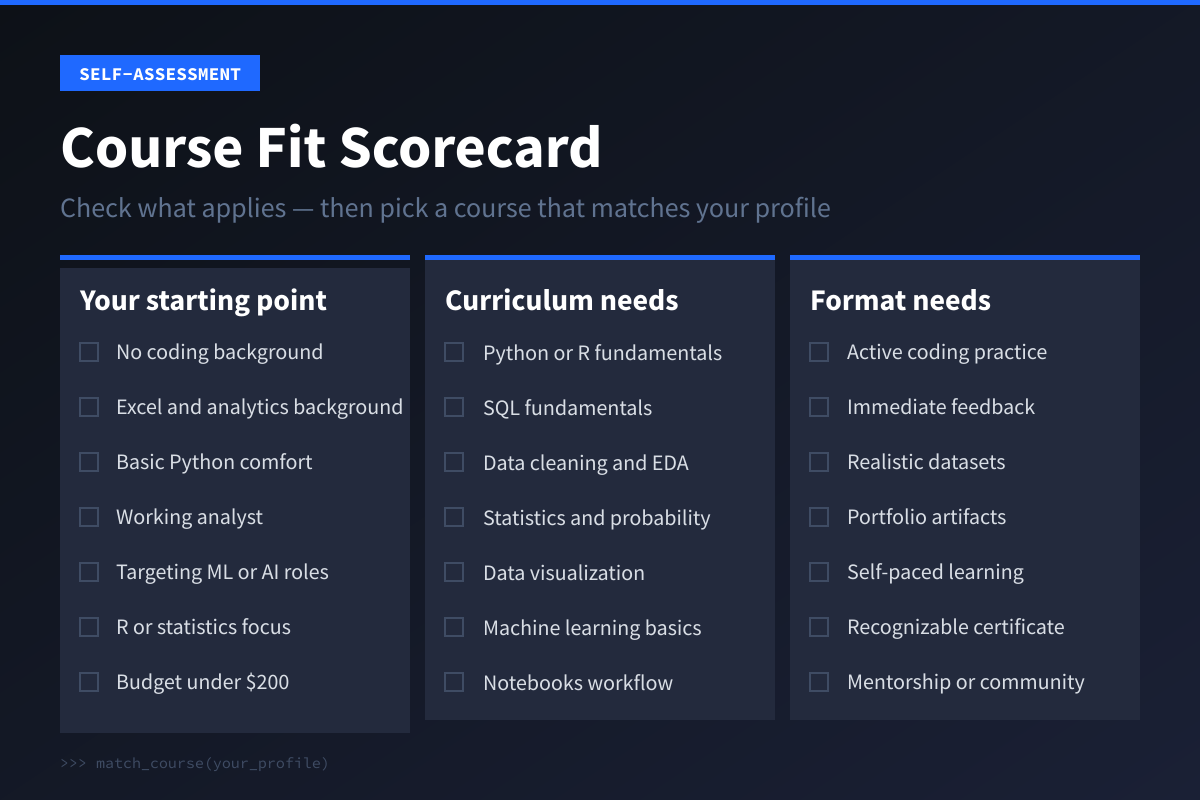
The right course depends on three things: your starting point, what curriculum gaps you need to fill, and what learning format actually works for you. Run yourself through the scorecard below before scrolling to the detailed reviews.
A certificate from Harvard, Google, or IBM doesn't hurt your résumé. But hiring managers in 2026 increasingly care more about your GitHub profile, your portfolio, and how you talk about your projects than which badge sits below your name. Data-career Reddit threads are full of practitioners reinforcing this:
"As its a new stream it demands practice. I prefer Kaggle and Github to store all my work." — Reddit, r/dataanalysis
Use the course to structure your learning, then plan to build two or three independent projects on top of it. That's where the real proof of skill lives.
How to build a portfolio while taking any data science course
A certificate proves you finished a course. A portfolio proves you can do the work. Hiring managers usually look at the latter more than the former.
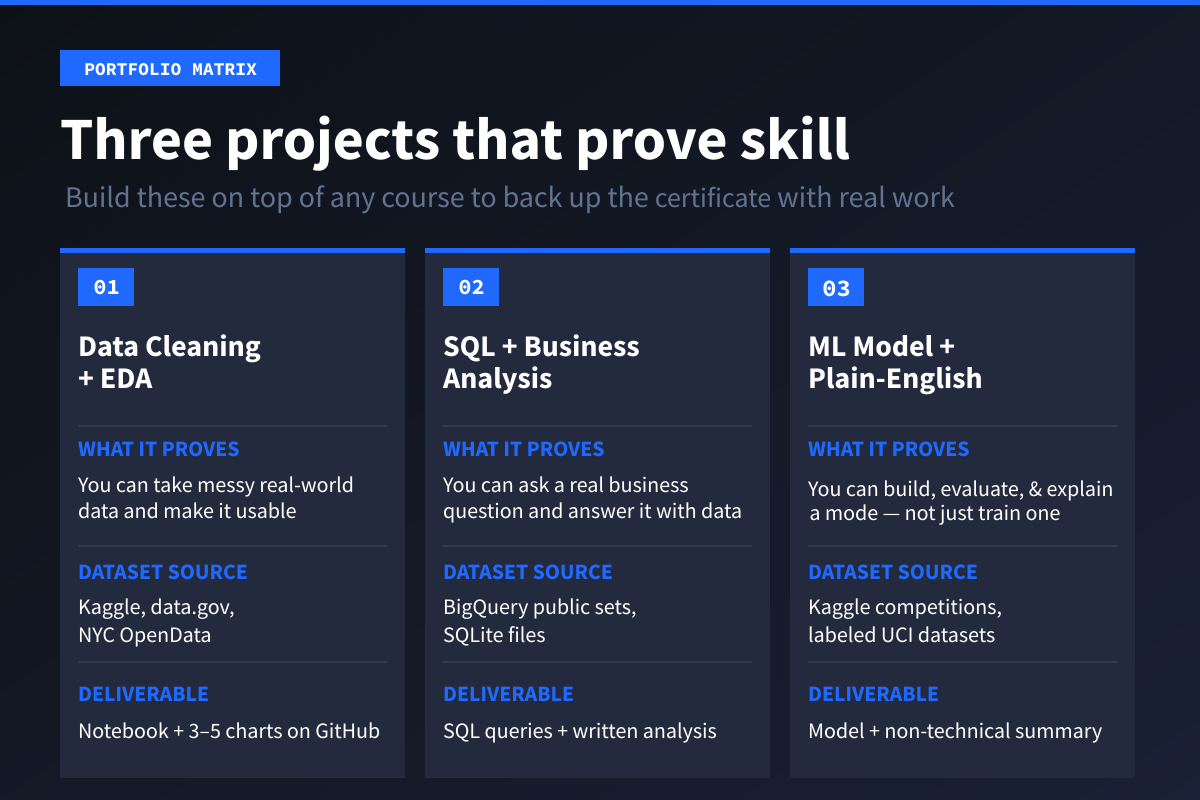
Whichever course you pick, plan to build at least three independent projects on top of it: one data cleaning + EDA project on a messy real-world dataset, one SQL + business analysis project that answers a real question, and one ML model with a plain-English explanation of what it does and where it breaks. The plain-English summary is what most beginners skip and what hiring managers actually read first.
The reason Dataquest's Data Scientist in Python path ranks #1 on this list is that the 27 guided projects double as portfolio starters. You're not finishing the course and then figuring out what to build — you're building all the way through.
Beyond the path itself, Dataquest also publishes a library of optional supplementary portfolio projects, most of them data-science-oriented, that you can pick up to deepen specific skills or expand your portfolio further.
If you're starting from no data background at all, the path to data science can feel longer than the path to data analytics. Analytics teaches data cleaning, SQL, business framing, and visualization without the math and modeling load. Many career changers find it easier to land a first analytics role, then move into data science from there. The Dataquest Data Analyst in Python path is the cleaner starting point if that route fits your situation.
Final recommendation: Which course should you choose?
The fastest way to decide is to start from your situation, not from the course list. The decision tree below maps the five most common starting points to the course that fits each one.
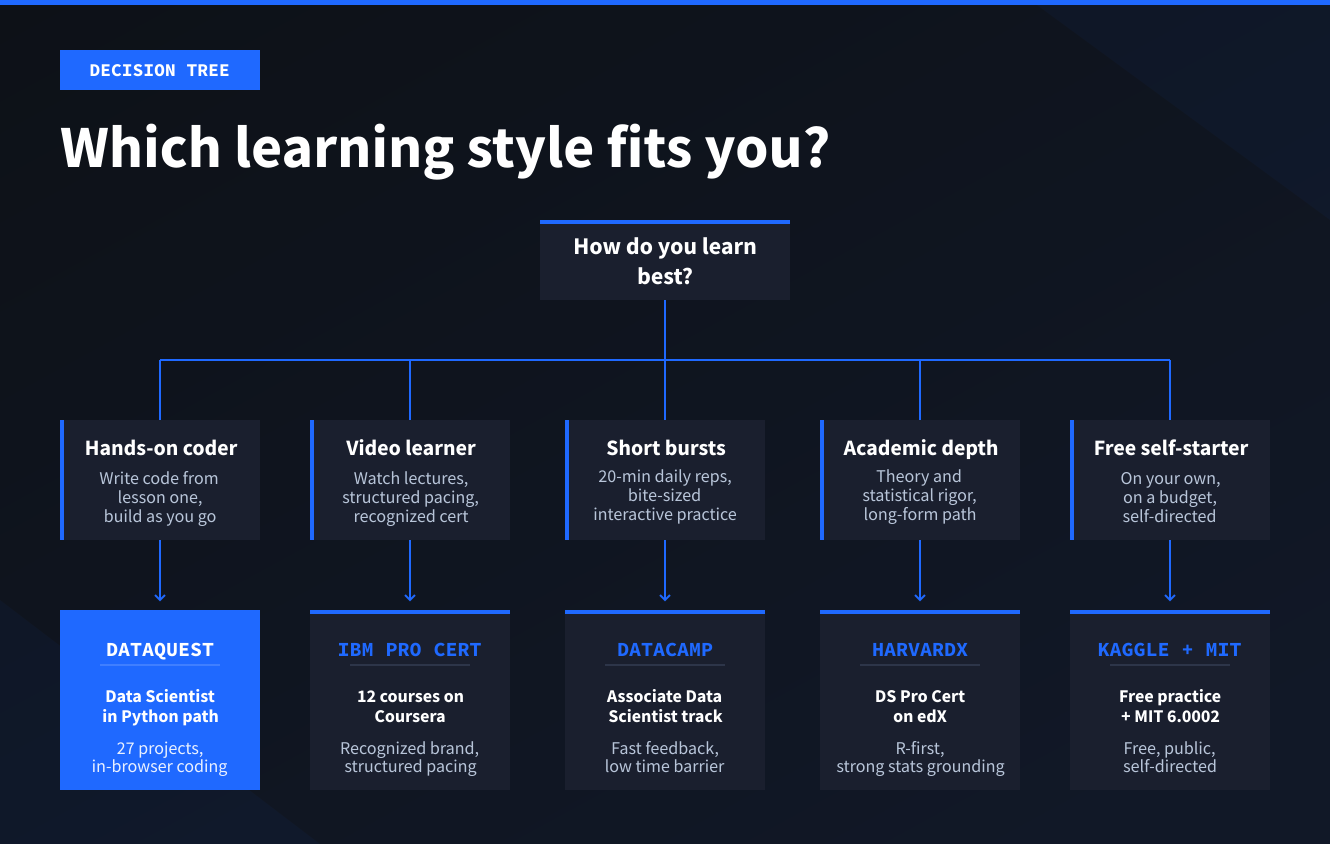
The most common mistake is picking the course with the most famous brand name attached and assuming that's enough. It usually isn't. Pick a course that matches your current skill level, gives you projects to build along the way, and points you toward a portfolio you can actually show a hiring manager.
If you do that, almost any course on this list can work. If you don't, even the most prestigious certificate will leave you wondering why your resume isn't getting callbacks.
FAQ: choosing a data science course in 2026
Which data science course is best for beginners?
For beginners who want a complete hands-on foundation, the Dataquest Data Scientist in Python path is the strongest option because it combines beginner accessibility with 27 real-world projects. If you specifically want a recognizable certificate, the IBM Data Science Professional Certificate is a solid alternative. For bite-sized interactive practice between longer study sessions, the DataCamp Associate Data Scientist in Python track works well as a supplement.
Are data science certificates worth it?
Certificates are worth it for structure and motivation. They give you a syllabus, deadlines, and a clear endpoint. They're less useful as standalone proof of skill. Most hiring managers care more about GitHub projects and how you talk about your work than about which platform issued your certificate. Plan to use a certificate to structure your learning, then build independent projects to prove you can apply what you learned.
Can I learn data science in 3 months?
You can build solid foundations in 3 months — Python basics, SQL, exploratory data analysis, and a first machine learning project are realistic in that window if you can commit 14–16 hours per week. Becoming genuinely job-ready usually takes longer. Most career changers we hear from spend 6–12 months building skills and a portfolio before they start interviewing successfully. Be skeptical of any course that promises a job in 90 days.
Should I learn data analytics before data science?
For true beginners with no data background, learning analytics first is often the faster route to your first data role. Analytics teaches SQL, data cleaning, business framing, and visualization without the heavier statistical modeling load. Once you have a year or so of analytics experience, the transition into data science is much smoother. The Dataquest Data Analyst in Python path is built specifically for this route.
Is Coursera or DataCamp better for data science?
They serve different purposes. Coursera is stronger for structured certificate programs (IBM, Google, HarvardX) where you want a credential and a defined endpoint. DataCamp is stronger for interactive in-browser coding practice where you want short, frequent reps. Neither replaces independent project work. If you can only pick one as your primary path, choose based on whether you learn better from structured certificate programs or from short interactive exercises.
Do I need Python, R, or SQL first?
Most job-focused learners should prioritize Python and SQL. Python is the dominant language in industry data science listings, and SQL appears in nearly every data role's job description.
If you're starting from zero and want the quickest route into data work, learn SQL first. It's significantly faster to pick up than Python or R. Most learners reach a useful level in weeks rather than months, and SQL alone can land you analyst-track roles. Add Python soon after to open up data science and ML paths.
R is valuable if you're targeting statistics-heavy work, biostats, or academic research, but for most industry data paths it's the third language to add, not the first.
What should I build after finishing a course?
Build three projects: one focused on data cleaning and exploratory analysis using a messy real-world dataset, one focused on answering a business question with SQL plus a written analysis, and one focused on building, evaluating, and explaining a machine learning model in plain language. Put all three on GitHub with clear README files. The plain-English explanation matters as much as the code — it's often what hiring managers read first when they look at your portfolio.
Want to read more?
Check out the full article on the original site