Contractors To Take On A Bigger Role In U.S Navy Aircraft Carrier Refuelling Operations
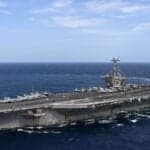


The U.S Navy plans to reduce the number of sailors involved in the Refuelling and Overhaul operations of its Nimitz-class Supercarrier USS Harry S.Truman (CVN-75), which is scheduled to begin this month.
Instead, the service will employ civilian defence contractors for the job, so that sailors can spend more time training and gearing up for the next deployment.
The Refuelling and Complex Overhaul (RCOH) updates the carrier’s systems and replaces its nuclear fuel, preparing it for another 25 years of its 50-year service life.
Earlier, most of the ship’s crew remained onboard or at the shipyard to perform lower-level maintenance and repairs, such as painting and structural preservation, along with yard workers.
However, from now onwards, the navy is shifting its maintenance strategy to reduce the burden on sailors, allowing them to focus on operational readiness and training rather than industrial work.
The strategy also aims to avoid past pitfalls.
Recent naval and maintenance projects suffered from delays and cost overruns.
The USS George Washington (CVN-73) spent nearly six years in overhaul due to supply chain disruptions and unexpected growth work, during which sailors endured severely deteriorating living conditions in an industrial shipyard.
The current overhaul of the USS John C. Stennis (CVN-74) has also slipped behind schedule.
Huntington Ingalls Industries’ (HII) Newport News Shipbuilding division, the only U.S. yard capable of nuclear carrier refuellings, has received over $1.4 billion for advanced planning and material contracts to prepare for the Truman.
The carrier’s overhaul is expected to last until January 2031, reflecting the impact of the pandemic’s industrial constraints and the need for extensive repairs following Truman’s collision with a commercial ship in the Mediterranean Sea in 2025.
By shifting more responsibilities to civilian contractors, the Navy hopes to streamline the process while preserving sailor morale during the long dry-docking period.
Want to read more?
Check out the full article on the original site