Indian Navy Set To Commission Three Warships As China Expands Indian Ocean Presence
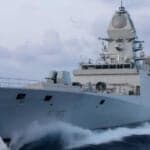


The Indian Navy will commission three warships together in Kolkata in the third week of June, in a rare simultaneous induction of frontline vessels spanning surface warfare, anti-submarine operations and hydrographic survey roles, sources said.
The ceremony is expected to be attended by a senior Union government dignitary and may coincide with Prime Minister Narendra Modi’s scheduled visit to the city, according to the sources.
The ships to be inducted are the stealth frigate INS Dunagiri, the anti-submarine warfare shallow water craft INS Agray and the survey vessel INS Sanshodhak.
This will be only the second instance in recent years of three frontline naval platforms being commissioned together.
The previous such ceremony took place in January last year in Mumbai, when destroyer INS Surat, frigate INS Nilgiri and submarine INS Vaghsheer were inducted.
The Indian Navy continues its warship acquisition and induction programme amid an expanding naval presence in the Indian Ocean Region, including that of China.
INS Dunagiri is the fifth Project 17A frigate and the second of its class built at Garden Reach Shipbuilders and Engineers (GRSE).
The ship is armed with BrahMos supersonic cruise missiles, surface-to-air missiles and close-in weapon systems. It is powered by a Combined Diesel or Gas propulsion system and features an Integrated Platform Management System.
The frigate was delivered in 80 months, compared with 93 months taken for the lead ship INS Nilgiri. Two more Project 17A frigates, INS Mahendragiri and INS Vindhyagiri, are yet to be commissioned.
INS Agray is the fifth vessel under the 16-ship Arnala-class Anti-Submarine Warfare Shallow Water Craft programme, approved in 2013.
The vessel is designed for operations in littoral waters and is equipped with lightweight torpedoes, indigenous anti-submarine rocket launchers and advanced sonar systems.
It is intended for submarine detection and engagement in shallow coastal areas where larger vessels have limited effectiveness, a capability seen as increasingly relevant given regional submarine activity, including Pakistan Navy’s induction of Hangor-class submarines.
INS Sanshodhak is the fourth and final vessel of the Sandhayak-class survey ship programme. The 110-metre vessel displaces about 3,300 tonnes and is equipped with Autonomous Underwater Vehicles, Remotely Operated Vehicles and hydrographic survey systems used for seabed mapping and navigational charting.
The three vessels together are expected to strengthen the Navy’s capabilities in surface warfare, anti-submarine operations in coastal waters and hydrographic surveying.
Since 2014, the Indian Navy has inducted more than 40 indigenous warships and submarines, with an average delivery rate of one induction roughly every 40 days, according to sources.
Further inductions of Project 17A frigates, including INS Mahendragiri and INS Vindhyagiri, are expected in the next phase of the programme, according to sources.
References: idrw, newindianexpress
Want to read more?
Check out the full article on the original site