Dali Chief Engineer Admits Hiding ‘Hazardous Condition’ Before Fatal Baltimore Bridge Collision
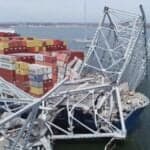


The Chief Engineer of Cargo Ship MV Dali, which rammed into Baltimore’s Francis Scott Key Bridge in March 2024, killing 6 construction workers, has reached a deferred prosecution agreement.
According to the Justice Department, Karthikeyan Deenadayalan admitted that he did not report a dangerous condition to the U.S Coast Guard, which led to the fatal collision.
He also knew that the ship was relying on an unsafe fuel supply pump.
The Chief Engineer will face 36 months of probation, and if he complies with the terms of the agreement, he will not be prosecuted.
In May 2026, two foreign operators and a shoreside superintendent related to the incident were also indicted by a federal grand jury.
The same month, Maryland arrived at the final settlement of $2.25 billion with Grace Ocean Private Limited and Synergy Marine Pte Ltd, the owner and operator of the cargo ship Dali.
Maryland has, however, yet to resolve claims against the shipbuilder, Hyundai Heavy Industries
The Justice Department said the accident caused $5 billion in infrastructure and environmental damage.
The National Transportation Safety Board reported having found a single loose wire in the electrical system, which led to a breaker opening unexpectedly, leading to a sequence of events followed by two blackouts onboard the ship and loss of propulsion power and steering.
Operators of the ship, the Singapore-based Synergy Marine Pte Ltd, and Synergy Maritime Pte Ltd, based in Chennai, India, and Radhakrishnan Karthik Nair, an Indian national who worked for both firms as the technical superintendent for the ship, were charged in the incident.
The companies stated that they would defend themselves against th charges.
Meanwhile, Synergy Marine added that the Justice Department had kept the crew members in the United States for more than two years, despite having evidence that they had taken the right and timely action in those circumstances.
The Justice Department has said that the defendants are accused of relying on a flushing pump for supplying fuel to two of the ship’s four generators.
However, the flushing pump was not designed to automatically restart after a blackout, and the ship’s generators could not operate without fuel supply.
They alleged that if adequate fuel supply pumps had been used, the ship would have regained power in time and the incident could have been avoided.
Want to read more?
Check out the full article on the original site