New Maritime Detection System Identifies Uranium-235 Nearly 1,000 Miles Away
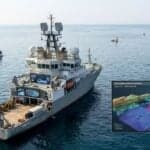


A Florida-based company, Base Molecular Resonance Technologies (BMRT), says it has completed new maritime trials of its Generation 2 detection system, including tests it claims show the ability to identify nuclear and energetic materials from offshore platforms.
The company said the system was tested during a U.S. government-sponsored field study and marked its first use in a real maritime environment.
BMRT said that while operating from a vessel about 1,500 feet offshore, the system detected ten nitrocellulose-based propellant targets located inside a vehicle on land.
In other tests, it identified a single trace target on a floating object at around 270 feet, and two separate targets at about 450 feet. The company said performance improved when more material was present.
The firm also reported underwater testing involving submerged trace amounts of nitrocellulose-based propellant. It said the system continued to detect targets under water and described performance as stable during these trials.
BMRT additionally disclosed a long-range detection event involving uranium-235. The company said that during a demonstration attended by U.S. Combatant Command representatives, the system detected a signal from Stuart, Florida, to the South Texas Project Electric Generating Station near Bay City, Texas, a distance of about 970 miles across the Gulf of America.
According to BMRT, military personnel at the demonstration recorded directional data and mapped it, which the company said aligned with the location of the nuclear facility.
The company said this result exceeded its earlier Generation 1 performance by about 323 miles. It added that previous tests, conducted with support from the Centre for Applied Innovation at York St John University in England, had already shown detection and localisation of uranium-235 and plutonium-239 signals using multiple observation points.
BMRT co-founder and CEO Robert “Bo” Short said the results challenge traditional ideas about shielding and concealment at sea. “The oceans have historically served as a sanctuary for concealment, transport, and strategic ambiguity. With this technology those assumptions collapse,” he said.
Co-founder and president Lee Duke said the system could support maritime monitoring, counter-proliferation efforts and nuclear transparency.
BMRT said it is releasing the information as the technology develops into its Generation 2 system and that a Generation 3 version is under development to improve range and precision.
The company said possible uses include maritime security, port protection, underwater threat detection, border monitoring, and tracking of illegal or sensitive material movements across sea and land.
BMRT also said ongoing testing suggests water may affect how its detection method behaves, and that this is still being studied.
The company has not given any timeline for operational deployment. It said further testing is ongoing. No independent verification of the claims was provided.
References: BMRT, interestingengineering
Want to read more?
Check out the full article on the original site