Stranded Ships Begin Moving Out Of Strait Of Hormuz After Over 3 Months Of Disruption
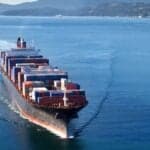


Ships have started moving again through the Strait of Hormuz after a preliminary agreement between the United States and Iran eased restrictions on movement through the key shipping route, according to maritime data firms.
Lloyd’s List Intelligence said major shipowners have resumed transits through the strait for the first time in about 110 days, after vessels were effectively stuck in the Persian Gulf since February.
The strait, off Iran’s coast, is one of the world’s most important energy routes and normally carries around one-fifth of global crude oil shipments. Its disruption has affected global shipping and oil movement.
Data from Kpler showed 25 vessels crossed the strait on Thursday, after six crossings on Wednesday and 11 the day before.
This marks the highest level of daily movement in more than two weeks, though traffic remains far below normal levels.
Lloyd’s List said ships operated by major companies including Grimaldi Group, Cosco, Knutsen and NYK have passed through the waterway.
Two Iranian crude tankers owned by the National Iranian Tanker Company, which are under sanctions, also entered the strait.
Italian Foreign Minister Antonio Tajani said an Italian merchant vessel owned by Grimaldi Group was among the first to pass through after the agreement.
Kpler data shows four Iranian tankers crossed the strait on Thursday, with three heading toward Iran’s main export hub at Kharg Island and running their tracking systems.
Tankers near Chabahar also turned their transponders back on after months, according to tracking firms.
About 18 million barrels of crude oil have left Iranian ports and anchorages in the past five days, according to TankerTrackers.
Despite the return of traffic, parts of the waterway are still restricted. Intertanko said the central shipping lane remains closed and an estimated 80 mines still need to be cleared.
Ships are instead using two alternative routes through Iranian and Omani waters. These routes are open but have lower capacity than the main channel.
U.S. Vice President JD Vance said the U.S. Navy had lifted its blockade of the strait to allow some ships to reach Iranian ports.
Lloyd’s List Intelligence estimates around 550 merchant vessels are still waiting in or near the Persian Gulf to pass through, including tankers, bulk carriers, container ships and vehicle carriers.
Intertanko has urged caution, saying shipowners need clear guidance on safety conditions, including mine clearance and issues like GPS interference and signal spoofing.
References: apnews, washingtonpost
Want to read more?
Check out the full article on the original site