U.S May Charge Strait Of Hormuz Tolls As Trump Calls America ‘Guardian Angel’ Of Middle East
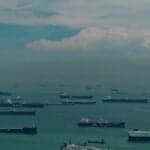


U.S President Donald Trump said that no tolls would be imposed for vessel passage through the strategic Strait of Hormuz, unless Washington is the one to do so.
He made the statement in a recent post on Truth Social in which he said-
“There will be NO TOLLS in the Hormuz Strait for 60 days during the Cease Fire Period, and there will be NO TOLLS after the 60 days have expired,” Trump wrote, “unless they are imposed by and for the United States of America.”
Though the MOU was signed between Iran and the U.S. to end the war and reopen the strategic waterway, Tehran declared it was closed again as Israel resumed its attacks on Lebanon, killing dozens of civilians.
Iran blamed the U.S for not upholding its commitments, and its military command ordered ships to turn back or take a different route, citing “clear breach” of the terms and conditions decided in the agreement.
However, U.S Central Command denied reports of Hormuz closure and stated that ships are transiting the waterway as usual.
Despite the signing of the deal, shipping companies, operators and managers remain cautious and reluctant to send vessels across the volatile waters, given the shifting positions of both parties and the uncertainty around the agreement’s terms.
The memorandum is also not intended to be a long-term deal. It is just a way for both parties to halt attacks, resume shipping operations through the Hormuz and then discuss major issues like Iran’s nuclear program.
Many points have also not been clearly covered in the official document, which does not even state whether tolls can be collected or not in Hormuz after the 60-day expiration.
Before the advent of the U.S-Iran war, which began after Israel and American attacks on Tehran, the Hormuz Strait was open to shipping, and there were no talks of imposing a fee or tolls from any country.
Trump himself said that the waterway should remain permanently toll-free; however, he changed course on Saturday and said that if it is to be done, then the U.S. would do it, not Iran.
No fees should be levied, Trump wrote, “unless they are imposed by and for the United States of America, should the deal not be completed”.
He added that the fee would compensate America for its services rendered as the ‘Guardian Angel’ of the Gulf Nations.
In April, Trump talked with local media and said, “What about us charging tolls? I’d rather do that than let them have them. Why shouldn’t we? We’re the winners. We won.”
There is no information on whether any such plans have been officially presented before Gulf allies, most of whom try to maintain a balance in their dealings with both the U.S. and Iran.
Senior Iranian officials said that Iran might impose a service fee on ships transiting Hormuz, reiterating the fact that only the Islamic Republic and Oman have the right to control and manage the Hormuz Strait.
They also stressed that in the coming days, talks should focus on the implementation of the current memorandum properly.
Pakistan, which is mediating between the US and Iran, has said that follow-up talks are set to begin in Switzerland today.
The Iranian delegation, led by parliamentary Speaker Mohammad Bagher Ghalibaf and Foreign Minister Abbas Araghchi, has arrived.
From the U.S., Trump’s son-in-law Jared Kushner, special envoy Steve Witkoff and Vice President JD Vance will be part of the negotiations.
Want to read more?
Check out the full article on the original site