Ships Advised To Transit Southern Strait Of Hormuz With Navigation Systems On, Says JMIC
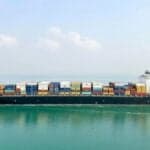


Ships can use the southern route through the Strait of Hormuz at any time of day or night with their tracking systems switched on, according to a new advisory from the Joint Maritime Information Center (JMIC), a maritime information body that works with naval and commercial shipping agencies.
JMIC said vessels do not need to coordinate with the US Navy’s NCAGS unit when using the southern coastal route along Oman, although it still encourages operators to share information for safer passage.
Ships are advised to keep AIS transponders on, use radar, maintain running lights, and continue normal radio communication.
The guidance is different from earlier US military advice, which had suggested ships travel “dark” with their AIS switched off and move mainly at night.
JMIC now allows normal navigation systems to remain active during transit.
The advisory also warns ships to watch for congestion in the strait and says there is a possibility of mines in the area, although clearing operations are expected.
The US Navy has previously said the southern route is free of mines, showing different assessments among authorities.
Iran has said ships crossing the strait must get its permission, adding to uncertainty over rules for passage through the waterway.
At the same time, JMIC has lowered its overall security threat level for the area to “moderate,” down from “substantial” earlier.
Traffic through the strait has been unstable in recent weeks. It increased after a US-Iran understanding but fell again as doubts grew over how long the agreement would hold.
Before recent disruptions, the strait handled about one-fifth of global oil shipments.
JMIC said ships can pass without mandatory coordination with the US Navy, though communication is still recommended. It did not explain what led to the change in guidance.
There is also ongoing signal interference in the region, including spoofing and jamming, which makes it difficult to confirm ship positions.
One tanker was seen moving through the southern route with its signal on after the advisory, while some vessels were also reported using the Iranian route.
References: moneycontrol, bloomberg
Want to read more?
Check out the full article on the original site