Watch: US Military Kills 3 In Latest Strike On Alleged Drug Boat In Pacific Ocean
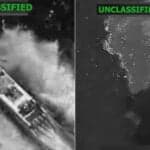


The US military said it killed three people in a strike on a suspected drug-smuggling boat in the eastern Pacific Ocean on Thursday.
The strike was carried out by US Southern Command along what officials described as known drug-trafficking routes.
A video posted on X showed a fast-moving boat before it was hit and burst into flames. The military did not provide evidence showing the vessel was carrying drugs.
US officials said the boat was operated by designated terrorist organisations and involved in narcotics trafficking.
The strike is part of an ongoing US military campaign against suspected drug traffickers in Latin America that began in September.
According to US military figures, at least 211 people have been killed in similar boat strikes since the campaign started.
President Donald Trump has said the US is in an “armed conflict” with drug cartels and has defended the strikes as necessary to stop drugs entering the country and causing overdose deaths.
The administration has released limited evidence publicly to support its claims.
The strikes have faced growing criticism in Washington. Senators on Thursday called for the Pentagon to release unedited video of the operations, according to reports from Politico and the Washington Post.
Some lawmakers are also warning they may challenge defence funding over concerns about transparency.
On June 18, at the direction of #SOUTHCOM commander Gen. Francis L. Donovan, Joint Task Force Southern Spear conducted a lethal kinetic strike on a vessel operated by Designated Terrorist Organizations. Intelligence confirmed the vessel was transiting along known… pic.twitter.com/22B31fjZUK
— U.S. Southern Command (@Southcom) June 18, 2026
Legal concerns have also been raised. Earlier in the campaign, two survivors of an initial strike were later killed when a second strike hit their vessel.
The White House said at the time the action was taken in self-defence and followed the laws of armed conflict. Some legal experts have said such an attack would be unlawful under international law.
The United Nations High Commissioner for Human Rights, Volker Türk, has called for an investigation into the strikes.
UN-appointed experts have said the use of lethal force in these cases may amount to “extrajudicial executions” and breach international maritime law.
The Pentagon’s inspector general said in May it would review whether the military followed its targeting procedures, known as the six-phase Joint Targeting Cycle. The review does not examine whether the strikes were legal.
The US campaign initially focused on waters between Venezuela and Trinidad and Tobago before expanding into the Caribbean Sea and the eastern Pacific Ocean.
Survivors from some strikes have been sent back to countries including Ecuador and Colombia rather than being detained by US authorities.
While US officials say the strikes aim to disrupt drug trafficking routes, some experts note that much of the fentanyl entering the US is smuggled overland from Mexico, where it is made using chemicals from China and India.
Insight Crime, a research group tracking global drug flows, said in April that while some routes have been disrupted, the overall impact of the maritime campaign is still unclear.
The operation continues under close scrutiny from lawmakers and the United Nations, with no indication yet of any change in US policy.
References: cbc, republicworld
Want to read more?
Check out the full article on the original site