Iran Says Strait Of Hormuz Will Never Return To Pre-War Status, Vows To Manage Strategic Waterway
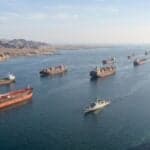


Iran’s Parliament Speaker Mohammad Bagher Ghalibaf has said the Strait of Hormuz will never return to the way it operated before the recent conflict, saying Iran will manage the strategic waterway while continuing to follow international regulations.
His comments came after he returned from Switzerland, where Iran and the United States completed the first round of technical talks under a 14-point memorandum of understanding (MoU) aimed at ending recent hostilities in West Asia.
Although both sides agreed to work towards a final agreement within 60 days, Ghalibaf’s remarks suggest Tehran wants a bigger role in managing the Strait going forward.
“Everyone should know that the administration of the Strait of Hormuz will never go back to the way it was before the war,” Ghalibaf said. “Of course, international regulations will be observed, but Iran will administer the Strait of Hormuz,” he added.
His remarks differ from those made by US President Donald Trump, who recently said the United States has “total control” of the Strait of Hormuz.
Speaking at the White House on Tuesday, Trump said the US Navy had kept the waterway open.
“We have total control of the Strait. We have a navy, there was a blockade, which was more effective than dropping bombs. We’re doing very well with respect to the Hormuz Strait,” Trump said.
Despite the differing views, Ghalibaf said Iran and the United States had agreed to set up a direct communication system to help avoid incidents in the Strait.
He said the two countries would establish a telephone hotline and a coordination centre that ships could contact if there were navigation issues, disputes or any uncertainty while passing through the Strait.
“If Americans have any objection to anything, or if any vessels or ships need clarity on any route or anything, they can call,” Ghalibaf said, adding that Iran would follow international maritime laws and quickly deal with any misunderstandings.
Ghalibaf also said Iran had shown its negotiating strength during the talks in Switzerland and claimed Tehran had influenced the discussions.
He alleged that Iran had prompted the United States to change a social media post within an hour after President Trump warned Tehran against supporting its regional “proxy groups,” especially Hezbollah in Lebanon. Ghalibaf described it as an example of Iran’s diplomatic influence.
The Parliament Speaker repeated that Iran does not trust the United States.
“We have never trusted the Americans; we don’t trust them now, and it is only reasonable to remain distrustful in the future,” he said.
He also claimed Iran’s participation in the Switzerland talks helped prevent further violence in the region.
According to Ghalibaf, the talks also covered Lebanon’s territorial integrity and regional ceasefire arrangements.
“Had we not gone to Switzerland for talks with the US, more blood would have been shed among Muslims and Shias in Lebanon at any moment,” he said.
Ghalibaf also called for unity under Iran’s Supreme Leader, Ayatollah Seyyed Mojtaba Khamenei, saying his decisions are final.
“We must remain united under the leadership of Ayatollah Seyyed Mojtaba Khamenei and recognise that his word and directives are final,” he said.
He further claimed that the talks with Washington had led to the release of frozen Iranian funds and the easing of oil sanctions.
However, the joint statement issued after the negotiations did not specifically mention the release of frozen assets or sanctions relief.
Instead, it said Iran and the United States had agreed to form a High-Level Committee, begin technical negotiations immediately and work towards a final agreement within 60 days.
The statement also announced a de-confliction mechanism involving Lebanon to help prevent renewed military escalation and protect the existing ceasefire.
US Vice President JD Vance said the latest talks had laid a “good foundation for a successful final deal.”
Iranian Foreign Minister Abbas Araghchi later claimed that restrictions on Iran’s oil and petrochemical exports had been lifted, the blockade had ended and some frozen assets were being released as part of reconstruction and development efforts.
The joint statement, however, did not explicitly confirm those economic measures.
Reference: ANI News
Want to read more?
Check out the full article on the original site