Ship Traffic Through Strait Of Hormuz Reaches Highest Level Since US-Iran War Began
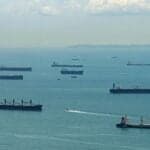


Commercial shipping through the Strait of Hormuz recorded its busiest day since the Middle East war began in late February, with vessel traffic picking up after last week’s agreement between Washington and Tehran eased months of disruption on one of the world’s most important oil shipping routes.
At least 37 commodity carriers passed through the Strait of Hormuz on Monday, according to maritime tracking firm Kpler, the highest daily total since the conflict began.
Another shipping data provider, AXSMarine, recorded 42 commercial vessel crossings, also the highest since the war started.
The Strait of Hormuz carries about one-fifth of the world’s oil and gas exports, making any change in shipping activity closely watched by global energy markets and the shipping industry.
Monday’s traffic was about one-third of normal peacetime levels, when around 120 commodity vessels usually pass through the strait each day. Kpler said the final number could increase as more ships are detected by maritime tracking systems.
Shipping through the strait has started to recover after the United States and Iran reached an agreement on June 14 to end the war.
Before that agreement, fewer than 10 commodity vessels were passing through the strait each day after Iran closed it on March 1 in response to U.S. and Israeli strikes.
Since June 15, the average number of commodity vessels using the waterway has increased to 21 per day. Over the past five days, that average has risen further to 27 vessels a day, according to Kpler.
Commodity traffic includes crude oil tankers, liquefied natural gas (LNG) carriers and dry bulk ships carrying cargoes such as fertilisers.
Five empty LNG carriers were among the vessels that crossed the strait on Monday, according to Kpler. LNG operators had previously been very cautious about sailing through the waterway because of security concerns.
“This may be one of the clearest signs so far of a tentative normalisation in traffic,” AXSMarine analyst Mihail Todorov told AFP.
Even as ship traffic increases, uncertainty remains over the future of the strategic waterway.
Iran’s chief negotiator, Mohammad Bagher Ghalibaf, said during talks in Switzerland that the Strait of Hormuz “will never return to its pre-war conditions and will be administered by the Islamic Republic of Iran, in accordance with international law,” according to Iranian state media.
How the strait will be administered remains one of the main issues in negotiations that are expected to continue over the next two months.
Iran announced on Saturday that it had closed the strait again in response to Israel’s attacks on Lebanon.
Separately, the United States said on Monday it was temporarily lifting sanctions on Iran until August 21, allowing the country to produce, sell and deliver crude oil and related petroleum products during that period.
Although ship traffic through the Strait of Hormuz is increasing, it remains well below normal levels, and future vessel movements are likely to depend on the outcome of ongoing negotiations and the security situation in the region.
References: Al Arabiya, Dawn
Want to read more?
Check out the full article on the original site