Hormuz Closure Strands 1,200 Cargo Ships Carrying $125 Bilion in Goods
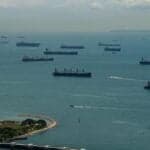


The closure of the Strait of Hormuz has left 1,200 cargo ships stranded with goods worth an estimated $125 billion.
The crisis has shifted maritime risk assessments and transformed theoretical chokepoint disasters into a stark operational reality.
The human and economic toll of the blockade has also been severe.
The International Maritime Organisation (IMO) confirmed that at least 14 seafarers have been killed and over 40 vessels, primarily oil tankers, have been struck by missiles since the conflict began.
Today, roughly 20,000 seafarers remain stranded aboard the ships.
The closure of the 34-kilometre-wide passage, which handles 20% of the world’s oil and LNG supply, caused massive shocks in global energy markets, initially driving Brent crude past $100 a barrel.
While a tentative peace memorandum signed last week between Washington and Tehran has boosted market confidence, the recovery is slow.
Outbound traffic spiked to 69 crossings last week, up from 24 the previous week, marking the highest volume since February. However, this remains well below the pre-conflict average of 140 daily transits.
Logistics giants and shipping experts warn that the bottleneck has altered global supply chains permanently.
Companies are now shifting from “just-in-time” to “just-in-case” logistics, aggressively investing in land-based workarounds and alternative ports outside the Gulf to bypass the chokepoint in the future.
Want to read more?
Check out the full article on the original site