China Denies Allegations Of Deliberately Targeting Panama-Flagged Ships At Its Ports
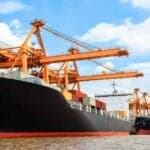


China has denied claims that it is deliberately targeting Panama-flagged vessels with increased inspections at its ports, saying the checks are being carried out for maritime safety after several accidents involving Panama-registered ships.
The issue comes months after Panama’s Supreme Court ruled that Hong Kong-based CK Hutchison’s contracts to operate two ports at either end of the Panama Canal were unconstitutional.
The decision has led to legal action, diplomatic tensions and growing attention from the global shipping industry.
Speaking at the Dialogue with Permanent Observers of the Organization of American States (OAS) in Panama on Tuesday, Chinese Ambassador Xie Feng rejected claims that China had increased inspections in response to Panama’s decision to cancel the company’s port concessions.
According to a statement from the Chinese Embassy, Xie said China carries out port state control inspections in line with Chinese laws and international conventions, and that the inspections are not aimed at ships from any particular country.
He said Panama-flagged ships had been involved in several collisions with merchant and fishing vessels in Chinese waters since the beginning of 2026, leaving people dead and missing. He said China increased inspections to improve maritime safety and protect seafarers.
Reports of a sharp rise in inspections of Panama-flagged ships at Chinese ports first appeared in early March, around the same time Panama’s Supreme Court declared CK Hutchison’s port contracts unconstitutional.
Panama’s Foreign Minister Javier Martinez-Acha raised concerns in early April over the increase in inspections and detentions of Panama-flagged vessels, urging China to respect the legal sovereignty of countries. Several Latin American nations also voiced support for Panama.
The issue has also drawn attention in the United States.
Federal Maritime Commission Chair Laura DiBella said inspections of Panama-flagged ships were far above normal levels and appeared to be taking place under informal instructions. She said China seemed to be punishing Panama after Hutchison lost control of the ports.
China rejected that accusation. Xie said the inspections were lawful safety checks carried out under international maritime rules. He also criticised Panama’s decision to cancel the port concessions.
According to Xie, the Chinese company had operated the ports legally since receiving the concession in 1997 and had contributed to Panama’s economic development.
He said cooperation between the two countries had remained smooth for nearly three decades, with no major disputes or complaints about the company.
“If contracts could be ignored, market principles ignored, assets taken over and operators forced out at any time, who would have the confidence to invest and seek cooperation?” Xie said.
Following the court’s ruling, interim operation of the two ports was handed to A.P. Moller-Maersk and Mediterranean Shipping Co.
CK Hutchison said it strongly disagrees with the court’s decision and has started international arbitration proceedings seeking compensation.
Panama has said it will launch a new tender this year for the operation of the two ports and plans to appoint separate operators for each facility.
Data reviewed by Lloyd’s List Intelligence showed inspections of Panama-flagged ships at Chinese ports doubled in March compared with historical averages and nearly doubled again in April.
The number of detentions recorded in March and April was higher than the total for all of 2025. The increase in inspections has also been followed by a sharp rise in vessels leaving Panama’s ship registry.
Unofficial reports have also claimed that China instructed companies to stop doing business with Panama. State-owned shipping company COSCO announced in early March that it had suspended container shipments to Balboa Port.
The dispute comes as the Panama Canal remains one of the world’s most important shipping routes, handling about 5% of global maritime trade and around 40% of U.S. container traffic.
Last year, CK Hutchison agreed to sell its non-port assets for $2.3 billion to a consortium led by BlackRock after the U.S. government threatened to take control of the canal if the Chinese company continued operating the ports.
Scott Kennedy, a senior adviser at the Center for Strategic and International Studies, told CNBC the dispute appeared to be “a simple contest for dominance in Latin America,” with the United States trying to limit China’s commercial influence in the region.
He said the dispute was likely to result in a lengthy legal battle, along with continued political and economic pressure from both Beijing and Washington.
China continues to insist its inspections are routine maritime safety checks, while Panama maintains that the sharp increase began after the cancellation of CK Hutchison’s port contracts.
Arbitration over the port concessions is continuing as Panama prepares a new bidding process for the two facilities.
References: China Daily, Global Times
Want to read more?
Check out the full article on the original site