Iran’s IRGC Navy Warns Ships To Use Only Tehran-Approved Strait Of Hormuz Routes
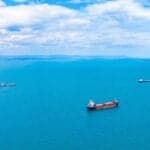


Iran’s Islamic Revolutionary Guard Corps (IRGC) Navy has warned ships passing through the Strait of Hormuz to use only shipping routes approved by Iran, saying vessels that use other routes could face enforcement action.
The warning came after Oman announced two temporary shipping routes through the strategic waterway in coordination with the International Maritime Organization (IMO).
The Strait of Hormuz is one of the world’s busiest shipping routes and is a key passage for global oil exports.
In a statement carried by Iranian state media, the IRGC Navy said that “certain authorities” had announced new shipping routes through the Strait of Hormuz without informing or coordinating with Iran.
The force said the proposed routes were “unacceptable” and posed serious safety risks.
It added that the only authorised transit routes through the Strait of Hormuz are those designated by Iran and warned ships not to sail outside those corridors.
“All ships are strongly advised to avoid any navigation outside the designated corridors,” the statement said.
The IRGC Navy also said vessels must stay in contact with Iranian naval authorities while passing through the strait.
“Coordination with the IRGC Navy via Channel 16 is mandatory for passage through the Strait of Hormuz. Any vessel found in violation will be subject to enforcement measures,” it said.
The statement came in response to Oman’s announcement earlier on Wednesday that it had established two temporary shipping routes north and south of the existing traffic lane in coordination with the IMO.
Under Oman’s plan, ships using the temporary corridor will receive individual navigation instructions, including departure times and designated routes. Shipmasters will remain responsible for carrying out their own navigational risk assessments.
Omani authorities also instructed vessels to keep their Automatic Identification Systems (AIS) switched on and report any navigational hazards to the Oman Maritime Security Centre.
Oman said no transit fees would be charged for ships using the temporary corridor. It said the arrangement was in line with understandings reached during recent discussions involving the United States and Iran.
The latest developments come as regional countries continue discussions on the future management of the Strait of Hormuz.
According to Reuters, Qatari Prime Minister Mohammed bin Abdulrahman Al-Thani travelled to Muscat on Wednesday for talks with Omani officials on launching a new round of discussions involving Iran, Iraq and Gulf Arab states on the future management of the waterway.
The proposed talks are separate from ongoing Iran-US negotiations and existing demining arrangements.
According to a diplomat familiar with the discussions, Gulf states are expected to push for the removal of transit fees, while Iran may propose alternative charges related to navigation, environmental protection and maritime security services.
The discussions follow a memorandum of understanding calling for structured talks between Iran, Oman, Gulf states and Iraq on managing the Strait of Hormuz. Pakistan has also been mentioned as a possible mediator.
Separate regional talks involving Iran and Gulf Arab states are also expected to take place in Riyadh.
Iran and Oman had earlier agreed to set up a joint committee to discuss future navigation management in the Strait of Hormuz. The committee will focus on maritime safety, navigation rules and related services and costs.
Both countries have previously said they remain committed to keeping the strait open for international shipping while maintaining sovereignty over their territorial waters.
Separately, US President Donald Trump said on Wednesday that it would be “unacceptable” if any future agreement with Iran included shipping or maritime transit fees in the Strait of Hormuz.
Speaking alongside NATO Secretary General Mark Rutte, Trump said such fees could set a precedent for other important waterways around the world.
He also said negotiations with Iran were progressing and claimed Tehran was making significant concessions.
Trump added that oil prices had fallen to around $70 per barrel despite the conflict, describing it as a positive sign.
Iranian Foreign Ministry spokesperson Esmaeil Baqaei later criticised US policies in the region, saying peace would not be possible as long as American military intervention continued.
References: ANI, almayadeen
Want to read more?
Check out the full article on the original site