War Risk Insurance Returns For Strait Of Hormuz Shipping, But Security Risks Delay Recovery
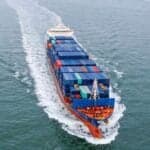


War risk insurance is once again available for ships sailing through the Strait of Hormuz after a preliminary peace agreement between the United States and Iran, removing one of the biggest hurdles for shipping companies using one of the world’s busiest energy trade routes.
The move is expected to support the gradual return of commercial shipping through the strait, which carries around 20% of global oil and liquefied natural gas (LNG) trade.
However, insurers and shipping industry officials say it will take time before vessel traffic returns to normal because security concerns, mine-clearance work and sanctions issues have not been fully resolved.
The United States and Iran reached a preliminary peace agreement on June 18 aimed at restoring cargo traffic through the Strait of Hormuz after a 30-day demining phase.
The following day, Chubb joined Lloyd’s syndicates and specialist insurers to create a war-risk insurance consortium offering up to $200 million in hull and third-party liability cover, along with another $200 million in cargo insurance.
Chubb’s chief executive said the company is arranging insurance cover and capacity as more ships begin using the route.
The initiative follows Chubb’s earlier agreement to manage a $40 billion reinsurance facility backed by the U.S. International Development Finance Corp. to support shipping through the Strait of Hormuz, although that programme saw limited participation.
The Lloyd’s Market Association (LMA), which represents insurers in the world’s largest marine insurance market, said shipping companies are unlikely to return to the Persian Gulf in large numbers until several operational issues are addressed.
In guidance issued on June 18, the LMA called for Iran, Oman and the United States to work together to improve navigational safety, clear mines, fully restore port services and ensure emergency support is available.
The association said shipowners and insurers need stable operating conditions before confidence returns and added that the recovery is likely to take months.
Shipping activity has already started to recover.
According to S&P Global Commodities at Sea, average daily ship transits through the Strait of Hormuz dropped from about 135 in February to fewer than 10 in early March after war-risk insurers cancelled policies and reissued them at much higher premiums following the outbreak of U.S.-Iran hostilities. By June 22, daily transits had recovered to 35.
Trade intelligence firm Kpler said at least 172 ships had passed through the strait since June 18 despite confusion over the weekend after Iran announced it would close the waterway again in response to Israeli attacks on Lebanon.
Insurance costs have also started to ease.
Marcus Baker, Global Head of Marine, Cargo and Logistics at Marsh, said additional war-risk premiums have fallen to around 3% to 4% of a ship’s hull value after the peace agreement, compared with 4.5% to 6% during the conflict. Before the fighting began, premiums were around 0.25%.
Other brokers said effective hull war-risk premiums have dropped from around 5% of a ship’s value to about 2% after discounts.
For some of the largest tankers, this has reduced insurance costs by hundreds of thousands of dollars, after premiums had reached millions of dollars a week during the conflict.
The chief executive of American P&I Club said insurers generally keep premiums low during peacetime but adjust prices when conflicts increase risks. He said policy cancellations allow insurers to reassess the situation rather than leave the market.
Daniel Tadros, chief operating officer of American Club, said current premium levels are still below the 5% to 7.5% charged during the Tanker War in the 1980s.
Shipping companies are also becoming more confident about using the route.
Baker said there is now enough insurance capacity for ships returning to the Strait of Hormuz. He also said more vessels are once again using their Automatic Identification System (AIS) transponders while passing through the waterway.
In the weeks before the peace agreement, many ships switched off their AIS signals because of security concerns.
Container shipping company MSC has also resumed transits through the strait. Its container ship MSC Qingdao passed through on June 20 with its AIS signal switched on, despite the company having previously seen several vessels attacked and two seized by Iran.
The head of one shipping company said a decision to sail through the Strait of Hormuz depends on three factors: security assessments, insurance cover and approval from the charterer. “You need those three layers to come up with something that resembles a green light,” the executive said.
While hull insurance costs have fallen, brokers said war-risk cargo insurance covering goods such as crude oil and grain has remained largely unchanged since the peace agreement.
James Reason, a broker at WTW, said premiums are likely to keep falling if the U.S.-Iran agreement holds and there are no further incidents. However, he said reports of mines in parts of the Strait of Hormuz continue to make insurers cautious.
Sanctions remain another challenge for insurers.
The United States has issued a sanctions waiver allowing Iranian oil sales until Aug. 21, but the European Union and the United Nations have not introduced similar exemptions.
The Lloyd’s Market Association has called on authorities in the UK, EU and the United States to provide clear and consistent guidance on sanctions and the designation of Iranian companies.
Industry officials also pointed to different Western sanctions on Russian oil exports. The United States continues to apply a $60-per-barrel price cap on Russian seaborne crude, while the EU, UK and Canada have lowered their limit to $44.10 per barrel.
Tadros said American Club follows UK and European sanctions rules because its reinsurance is placed in those markets through the International Group of Protection and Indemnity Clubs. He said the different sanctions rules have increased the club’s compliance work.
The chief executive of American P&I Club said closer coordination between regulators and better communication with the insurance industry would help create a more consistent regulatory system.
Although insurance is once again available and ship traffic is increasing, the shipping industry says a full return to normal operations in the Strait of Hormuz will depend on improved security, completion of mine-clearance work and greater clarity on international sanctions.
References: indexbox, ft
Want to read more?
Check out the full article on the original site