China Emerges As World’s Fastest-Growing Submarine Builder Overtaking U.S & Russia Combined
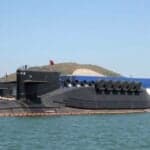


China has built more submarines than the United States and Russia combined over the past five years, expanding its underwater fleet at a pace unmatched by any other country.
It has also introduced several new submarine designs and expanded its nuclear submarine production as global submarine construction reaches its highest level since the Cold War.
Around the world, 16 countries have launched about 77 submarines since 2021, marking a sharp rise in investment in undersea military capabilities.
Countries are increasingly strengthening their submarine fleets as they focus on deterrence, intelligence gathering and maritime security.
China has led this surge, not only by building the highest number of submarines but also by introducing new designs faster than its rivals. Over the past five years, it has added seven new submarine classes to its fleet.
Russia, in comparison, introduced only one new submarine class during the same period, the Khabarovsk, which reportedly took more than 11 years to build.
The United States has continued building submarines under its existing Virginia-class programme but has not introduced a new submarine class.
The report notes that China’s rapid pace of construction does not necessarily mean its submarines are more advanced than those of other countries. However, it does show how quickly the country’s submarine industry is expanding and developing new designs.
Global submarine production is now at levels last seen in the 1980s. Unlike the Cold War, when only a few countries built submarines, production is now spread across a larger number of nations.
Of the 77 submarines launched since 2021, 33 are nuclear-powered. They were built by China, Russia, the United States, the United Kingdom, France and India.
Several other countries are also working on nuclear-powered submarines. Brazil and North Korea are building their first such vessels, while South Korea and Australia plan to operate nuclear-powered submarine fleets in the future.
As submarines become more important for military deterrence, intelligence missions and maritime security, more countries are investing in their own submarine-building programmes.
China is also developing extra-extra-large uncrewed underwater vehicles (XXLUUVs), which are underwater drones about the same size as conventional submarines.
According to the report, no other country is publicly known to be building unmanned underwater vehicles this large.
Another area where China is advancing is nuclear-powered air-independent propulsion technology. Its Type-041 Zhou-class submarine is reported to use a small nuclear power plant, described as a form of nuclear air-independent propulsion (nuclear-AIP).
China is also expanding where it builds nuclear submarines.
For years, the Huludao shipyard in northern China was the country’s only nuclear submarine construction site. Now, two more shipyards along the Yangtze River, Wuchang in Wuhan and the JN yard in Shanghai, are also building nuclear-powered submarines.
Wuchang is expected to build the Type-041 Zhou class, while the Shanghai yard has already launched a larger nuclear-powered attack submarine from a new class.
Huludao launched a similar submarine just days later. However, little information has been released about the design or how it is linked to the future Type-095 programme.
With three shipyards now producing nuclear submarines, China’s production capacity is expected to grow significantly.
Some estimates suggest the country could eventually launch around six nuclear-powered submarines each year, about three times the current U.S. production target.
China is also expanding its submarine exports. It recently built four Hangor-class submarines for Pakistan under a joint production agreement.
Germany and France remain the world’s leading submarine exporters, while Spain and South Korea are becoming important new players.
More countries are also signing technology-transfer and local manufacturing agreements to help build submarines at home.
Reference: interestingengineering
Want to read more?
Check out the full article on the original site