Iran Reasserts Control Over Hormuz After Ship Attack Near Oman, Warns Gulf States Against Backing US
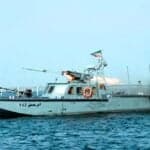


Iran on Friday reaffirmed its right to control shipping through the Strait of Hormuz and warned Gulf states against supporting the United States, a day after a commercial vessel was hit near Oman.
The incident has added fresh uncertainty to one of the world’s most important oil shipping routes, even as an interim US-Iran agreement aims to reduce tensions.
The Strait of Hormuz is a key maritime chokepoint through which around one-fifth of global oil and liquefied natural gas supplies normally pass.
Any disruption in the waterway has a direct impact on the global energy trade, shipping operations and markets.
Iran said it was responding to what it called an “interventionist, irresponsible and provocative” joint statement by the United States and six Gulf states. The statement rejected Iran’s claim that it could charge tolls on ships passing through the strait.
“Safe passage through the Strait of Hormuz cannot be guaranteed under ambiguous arrangements, parallel routes or decision-making that does not take Iran’s role as a coastal state into account,” Deputy Foreign Minister Kazem Gharibabadi said on X.
Iranian state media later reported that three foreign tankers attempting what it described as an “unauthorised passage” through the strait were turned back after warnings from the Islamic Revolutionary Guard Corps.
No further details were given. A US official said Washington was aware of the reports and was reviewing them.
The developments follow an incident on Thursday involving the Singapore-flagged ship Ever Lovely, operated by Taiwan’s Evergreen Marine.
The company said the vessel was hit near Oman by an “unknown object” while sailing on a route recommended by the United Kingdom Maritime Trade Operations (UKMTO).
The ship was not damaged enough to stop its voyage and later continued out of the Strait of Hormuz. Two US officials told Reuters that Iran had fired on the vessel. Iran has not commented on the claim.
Iran’s Persian Gulf Strait Authority, which manages shipping requests through the strait, said vessels using unauthorised routes would do so at the responsibility of the owner, operator and master.
US Secretary of State Marco Rubio, speaking after a regional tour, said the United States would react if Iran threatened or blocked shipping in the strait.
In a joint statement with the Gulf Cooperation Council, the US called for “free, unconditional, and unrestricted navigation” in the strait and rejected tolls or any attempt to assert control over maritime passage.
It also said a lasting deal must address Iran’s missile programme, drones and support for armed groups.
Iran’s foreign ministry said the US military presence in the Gulf was the main cause of regional instability. It said the strait should be managed by Iran and Oman under the terms of the interim agreement and warned against continued hostile policies.
Tensions follow months of conflict after US-Israeli strikes on Iran on February 28 disrupted oil flows and global energy markets.
Iran later carried out strikes against Israel and Gulf states hosting US forces, while Hezbollah also escalated attacks from Lebanon.
Ali Akbar Velayati, an adviser to Iran’s Supreme Leader, warned Gulf states that regional stability depends on Iran’s long-standing role in managing the waterway.
“The stability of the Persian Gulf Arab states is indebted to Iran’s century-long management of the Strait of Hormuz… their strategic survival is at the mercy of Tehran’s tolerance,” he said on X.
Despite tensions, some commercial activity has restarted in the region.
Saudi Aramco resumed crude loadings on Friday at its Ras Tanura terminal, the world’s largest oil export facility, after nearly four months of suspension.
Two very large crude carriers operated by Saudi shipping company Bahri were loading cargo, while another waited nearby. Each VLCC can carry about two million barrels of oil.
Fertiliser shipments through the Strait of Hormuz have also increased, reducing concerns about disruption to global food supply chains.
Oil prices fell more than 3% on Friday and were heading for weekly losses, despite slower shipping traffic and ongoing uncertainty around the US-Iran interim deal.
The International Maritime Organization (IMO) temporarily paused its escort operations for ships passing through the strait after the Oman incident.
Earlier, the IMO and Oman announced a new southern route to help move vessels stranded during the conflict, a move that Iran opposed.
South Korea said three of its ships would leave the strait over the weekend, while eight other South Korean vessels have already exited the waterway.
Several issues remain unresolved under the interim US-Iran agreement, including financial incentives for Iran, nuclear inspections and the wider conflict involving Israel and Lebanon.
The deal has opened a 60-day negotiation period focused on these issues, especially Iran’s nuclear programme.
US President Donald Trump has warned that if Iran does not follow the agreement, including reopening the Strait of Hormuz, the United States could resume military action.
References: Reuters, economictimes
Want to read more?
Check out the full article on the original site