France Takes Delivery Of 5,200-Ton Nuclear Attack Submarine Built For Stealth And Deep Strikes
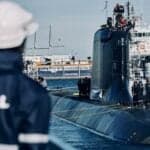


France has received its fourth Barracuda-class nuclear-powered attack submarine, adding another advanced vessel to the French Navy as it continues replacing its ageing Rubis-class submarine fleet.
Built by Naval Group in Cherbourg, the submarine, De Grasse, was delivered on June 24 under the Barracuda programme managed by the French Defence Procurement Agency (DGA).
The handover came exactly four months after the submarine began its sea trials.
The delivery marks another milestone for the Barracuda programme. The first three submarines, Suffren, Duguay-Trouin and Tourville, are already in active service, while the remaining two, Rubis and Casabianca, are under construction and are due to be delivered before the end of the decade.
According to Naval Group, De Grasse benefited from experience gained during the construction and testing of the first three submarines.
After leaving its construction hall in May 2025, the submarine completed dockside trials, its nuclear boiler room was commissioned in December 2025, and it began a four-month sea trials programme on February 24, 2026.
The Barracuda programme is being led by the DGA in partnership with the French Atomic Energy and Alternative Energies Commission (CEA) for the submarines’ nuclear boilers.
It is intended to replace the Rubis-class nuclear-powered attack submarines currently in service with the French Navy.
Naval Group said it is responsible for designing and building the submarines with its partners. The company also manufactures the main components of the nuclear boilers together with TechnicAtome and provides logistical support and maintenance for the submarines in Toulon.
The Barracuda-class submarines are designed to carry out a wide range of missions, including anti-submarine warfare, anti-surface warfare, intelligence, surveillance and reconnaissance, land attacks, and special forces support.
Naval Group said they can also support deterrence missions, carry out deep strikes, monitor large maritime areas, operate with naval aircraft forces and take part in coalition operations.
The submarines are armed with Naval Cruise Missiles (NCM), F21 heavyweight torpedoes and modernised Exocet SM39 anti-ship missiles.
They use a hybrid propulsion system that includes a pressurised water reactor derived from the reactors used on the Triomphant-class ballistic missile submarines and the aircraft carrier Charles-de-Gaulle, along with one propulsion turbine, two turbo-generators and two electric motors.
According to Naval Group, each submarine can remain available for more than 270 days a year and can accommodate 65 crew members, along with commandos.
The Barracuda class has a surface displacement of 4,700 tonnes and an underwater displacement of 5,200 tonnes. Each submarine is 99 metres long and has a diameter of 8.8 metres.
Naval Group said the Barracuda class is designed to be extremely quiet, stealthy, highly mobile and capable of operating for long periods at sea. The company added that the submarines are built to support France’s naval deterrence while carrying out a wide range of military operations.
References: naval-group, interestingengineering
Want to read more?
Check out the full article on the original site