Unidentified Projectile Strikes Oil Tanker Crossing Strait Of Hormuz
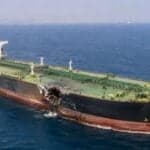


An oil tanker was hit by an unidentified projectile while sailing through the Strait of Hormuz on Saturday, damaging its bridge but leaving all crew members safe.
The incident came hours after Washington and Tehran launched attacks against each other in the biggest escalation since they reached an interim peace agreement earlier this month.
The UK Maritime Trade Operations (UKMTO) said the tanker reported being struck by an unidentified projectile while transiting the strait.
The vessel suffered damage to its bridge, but no injuries or pollution were reported. UKMTO advised ships in the area to remain cautious and report any suspicious activity while authorities investigate the incident.
Maritime security firm Vanguard Tech identified the vessel as the Panama-flagged tanker KIKU. According to Kpler data, it was a fully loaded supertanker carrying oil loaded in Qatar.
The attack is the second reported strike on a merchant ship this week. On Thursday, the container ship Ever Lovely was hit in an incident that prompted the United States to carry out strikes on Iranian targets, saying it was responding to an attack on commercial shipping. Iran later said it had retaliated by targeting assets linked to US forces.
Iran’s Revolutionary Guards said on Saturday they had attacked American positions in the Gulf following overnight US strikes. Iran has not directly commented on reports of attacks on commercial vessels.
However, Iranian state television said the Revolutionary Guards fired “warning shots” at vessels attempting to use shipping channels not approved by Iran. It added that some ships were now seeking Iranian permission before entering the strait.
Following the latest incidents, the Joint Maritime Information Center (JMIC), which shares information between naval forces and merchant ships, raised its regional threat level to Substantial.
JMIC also said the Omani shipping route had been expanded to allow two-way traffic at the same time. It warned that much of the usual Strait of Hormuz transit route could be at risk from possible naval mines.
The International Maritime Organization warned on Friday that around 80 mines could have been laid in the Strait of Hormuz.
Mines remain one of the biggest concerns for shipowners operating in the region. Under the interim agreement with the United States, Iran is expected to remove any mines, although it is still unclear how much of that work has been completed.
Iran has also repeated that ships should use its designated transit route. Earlier this week, some vessels reportedly turned back after receiving radio messages telling them not to sail outside approved channels.
Shipping through the Strait of Hormuz had started increasing after the United States and Iran reached their interim agreement, helping push crude oil prices lower. Although traffic has improved, it is still below pre-conflict levels.
Officials said it was too early to know whether Saturday’s attack would affect vessel movements through the strait. Even before the interim agreement, millions of barrels of oil continued to pass through the waterway, with many ships reportedly sailing with their satellite tracking systems switched off.
Washington has encouraged ships to use a southern route along Oman’s coast, while Tehran wants vessels to use a northern route through Iranian waters.
Ebrahim Azizi, head of Iran’s parliamentary national security committee, said any ship violating Iran’s shipping instructions would face a decisive response.
Iran has accused the United States of breaking the interim agreement by failing to maintain a promised ceasefire in Lebanon. Tehran said its latest military action was a defensive response to overnight US strikes.
Bahrain, which hosts the US Navy’s regional headquarters, reported an Iranian drone attack. The US military did not immediately comment on the report.
US Vice President JD Vance said Washington had honoured the ceasefire agreement and blamed Iran for the renewed violence.
“Iran signed a ceasefire agreement. We have honored it. If they have disagreements about how the MOU is being applied, they can pick up the phone. But violence will be met with violence,” Vance wrote on X.
UKMTO said the damaged tanker remains afloat, all crew members are safe, and no environmental damage has been reported. Authorities continue to investigate the incident while advising ships transiting the Strait of Hormuz to remain alert.
References: Bloomberg, Reuters
Want to read more?
Check out the full article on the original site