NATO Foreign Ministers Meet Gulf Counterparts Amid Strait Of Hormuz Shipping Disruption


NATO foreign ministers met their Gulf Arab counterparts on Tuesday to discuss the ongoing deadlock over reopening the Strait of Hormuz, where France and Britain presented a proposal for a multinational maritime security mission that Iran has so far rejected.
The meeting took place on the sidelines of the NATO summit in Ankara and brought together ministers from Bahrain, Kuwait, Qatar and the United Arab Emirates after weeks of tensions in one of the world’s most important shipping routes, despite an interim U.S.-Iran peace agreement reached in mid-June.
Commercial shipping through the Strait of Hormuz remains disrupted after Iran blockaded the waterway following U.S. and Israeli military action against the country in February.
Although the interim agreement reduced direct fighting, vessels are still facing challenges transiting the strait, keeping shipping costs high and putting pressure on global supply chains. About one-fifth of the world’s oil supply normally passes through the Strait of Hormuz.
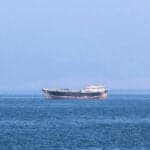
The security situation worsened early Tuesday after the United Kingdom Maritime Trade Operations (UKMTO) reported a tanker had been struck east of Oman’s Limah.
Separately, Axios reported that Iran’s Revolutionary Guards fired at least two missiles at commercial ships transiting the Strait of Hormuz.
Belgian Foreign Minister Maxime Prevot said the meeting was also intended to show support for Gulf countries that were targeted by Iranian attacks earlier this year.
He said the stability of Bahrain, Kuwait, Qatar and the United Arab Emirates was closely linked to Europe’s security, adding that the issue extended beyond the Strait of Hormuz despite its importance to European energy supplies.
During the meeting, France and Britain presented their proposal for a multinational maritime mission to help secure commercial shipping through the Strait of Hormuz once regional tensions ease.
However, diplomats said Iran’s continued opposition means the proposal is unlikely to end the current deadlock.
European countries have said they do not want to become directly involved in the conflict, which they say began without consultation with them, but they are willing to help secure the waterway after the fighting ends.
France and Britain have been working to build a coalition of around a dozen countries to help ensure safe passage for commercial vessels once tensions decrease or the conflict is resolved. Diplomats said any long-term plan would still require Iran’s approval.
Iran has repeatedly opposed any foreign military presence in the region and last week rejected comments by French President Emmanuel Macron suggesting the mission would move forward.
One European diplomat described Tuesday’s meeting as largely symbolic, saying French President Emmanuel Macron was seeking to show Europe as a reliable ally to U.S. President Donald Trump during the NATO summit.
The diplomat added that the proposed maritime mission was unlikely to move forward without Iran’s approval.
Two other diplomats also said they did not expect the talks to produce an immediate breakthrough.
Several NATO allies have already deployed minehunters, warships and support vessels in the region as they continue to monitor maritime security.
Diplomats said France and Britain hope to launch an initial maritime mission in the Gulf of Oman, which links the Arabian Sea with the Strait of Hormuz and is bordered by Iran, Oman and the United Arab Emirates.
In a joint statement issued on July 3, France and Britain said the Sultanate of Oman had agreed to work with both countries to ensure safe navigation in its territorial waters.
NATO members have largely avoided direct involvement in the conflict, instead supporting efforts outside the alliance to improve maritime security and help reopen the Strait of Hormuz.
Speaking on arrival in Ankara, U.S. President Donald Trump criticised several NATO allies, saying they had been unwilling to support Washington during the conflict with Iran. He named Britain, Italy, France and Germany.
The meeting ended without any indication of a breakthrough on the proposed maritime mission, leaving future efforts to reopen the Strait of Hormuz dependent on broader diplomatic progress and Iran’s willingness to accept an international maritime security arrangement.
References Reuters, Times of Israel
Want to read more?
Check out the full article on the original site