Strait Of Hormuz Shipping Threat Raised To ‘Severe’ After Recent Tanker Attacks
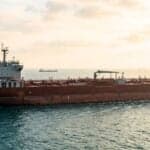


The threat to commercial ships sailing through the Strait of Hormuz was raised to “severe” on Tuesday after several tankers were attacked near the strategic waterway.
The attacks involved an LNG carrier and crude oil tankers at a time when vessel traffic through the Strait of Hormuz remains well below normal levels despite a June agreement between Washington and Tehran to reopen the route.
The incidents also pushed oil prices higher, with Brent crude rising nearly 6% in post-market trading to approach $76 a barrel.
The Joint Maritime Information Center (JMIC), a U.S. Navy-led coalition that works with merchant ships in the region, raised the maritime threat level from “substantial” to “severe”, saying “deliberate hostile action” against vessels is now likely under current conditions.
It is the first time the threat level has reached “severe” since June 15.
“The recent confirmed incidents highlight that the threat environment remains heightened and warrants extreme vigilance,” JMIC said, adding that ships should expect continued naval activity, congestion along transit routes and increased hailing by Iran’s Islamic Revolutionary Guard Corps (IRGC).
The United Kingdom Maritime Trade Operations (UKMTO) also reported three separate tanker attacks near the Strait of Hormuz on Tuesday.
According to UKMTO, an LNG tanker sailing southbound about eight nautical miles east of Limah, Oman, was struck by an unknown projectile in its port-side engine room, causing a fire.
A very large crude carrier (VLCC) was hit on its port side while leaving the Strait of Hormuz about 16 nautical miles east of Khor Fakkan in the United Arab Emirates but continued its voyage without any reported injuries.
A third tanker suffered minor structural damage after being struck six nautical miles east of Oman’s Musandam Peninsula and also continued to its next port.
UKMTO said there were no casualties or environmental pollution from the three incidents but warned that navigation interference continues in the area and that the risk from mines remains relevant around the traffic separation scheme.
Later on Tuesday, UKMTO reported that another tanker was hit by a drone while passing through the Strait of Hormuz. The vessel suffered minor damage and continued its voyage.
One of the vessels attacked was identified as Al Rekayyat, a liquefied natural gas tanker owned by Nakilat, also known as Qatar Gas Transport Company Ltd.
Sources familiar with the incident said the vessel was hit on its port side and that a fire in the engine room created a risk of explosion before the crew was safely evacuated.
Qatar’s foreign ministry blamed Iran for the attack, saying Tehran bears full legal responsibility. It also summoned Iran’s deputy ambassador in Doha to protest the incident. It was the first reported attack on a Qatari LNG tanker since the conflict began on February 28.
Saudi Arabia also blamed Iran after the Saudi-flagged supertanker Wedyan, owned and managed by Bahri, was damaged while sailing near Oman’s coast.
Nakilat, QatarEnergy, Qatar’s international media office, U.S. Central Command and Bahri did not immediately respond to requests for comment.
No group has claimed responsibility for the attacks. However, a U.S. official, speaking on condition of anonymity, said initial indications suggested Iran had fired at two commercial vessels.
Iran rejected the accusations. A spokesperson for Iran’s foreign ministry said ships using routes that are not coordinated with Iran or tampering with their tracking systems face risks and interfere with Tehran’s efforts to ensure safe passage through the Strait of Hormuz.
The attacks came weeks after Iran agreed to allow commercial shipping through the Strait of Hormuz under an interim agreement reached with the United States on June 17, ending a three-month disruption that had sharply reduced energy shipments through the waterway.
The latest incidents have put that agreement under fresh pressure.
On Tuesday, the White House revoked a licence that had allowed Iran to sell oil under the June agreement, calling Iran’s actions in the Strait of Hormuz “wholly unacceptable” and warning there would be consequences.
The licence had eased decades-old sanctions as part of the agreement to reopen the waterway.
“This is not a small step by Washington,” said Brett Erickson, managing principal at Obsidian Risk Advisors, adding that the licence was one of the key concessions Iran had sought in return for lifting its blockade of the Strait of Hormuz.
The United States and Iran are still holding talks over Tehran’s nuclear programme and Iran’s demand for greater control over the Strait of Hormuz. Another round of talks ended last week without a permanent agreement.
U.S. President Donald Trump said on Monday that Washington would either reach a deal with Iran or “finish the job,” renewing the threat of military action. Iran’s foreign minister said on Tuesday that talks on a final agreement would not begin if U.S. threats continued.
Bob McNally, president of Rapidan Energy Group, said the attacks and Washington’s decision to revoke the oil waiver show that the ceasefire is less stable than oil markets had expected.
Michelle Wiese Bockmann, senior maritime intelligence analyst at Windward, said shipping through the Strait of Hormuz has effectively split into separate routes.
Gulf states are using a southern corridor protected by the U.S. Navy, while Iran has warned it will target ships that do not use a northern route approved by Tehran. Ships are also avoiding the traditional central route after it was mined.
“There is obviously a battle for control, because obviously the only leverage Iran has is control of Hormuz,” Bockmann said.
Ship traffic through the Strait of Hormuz remains well below pre-war levels.
According to ship-tracking firm Kpler, only 16 vessels passed through the strait on Tuesday, the lowest daily figure in nearly three weeks. Traffic has averaged 25 to 40 ships a day over the past week, compared with around 125 daily transits before the conflict.
Kpler also verified that more than 100 ships transited the Strait of Hormuz over the weekend. Windward estimated crude oil exports through the waterway averaged about 4.3 million barrels per day in June, compared with more than 15 million barrels per day before the war.
Shipbroker BRS said the stop-and-start reopening of the Strait of Hormuz continues to create volatility in the tanker market because vessel movements through the waterway remain irregular.
Freight rates have also increased, with average daily tanker earnings for loading inside the Gulf rising to almost $300,000, up from below $200,000 a week earlier.
References: Reuters, CNBC
Want to read more?
Check out the full article on the original site