4 Oil And LNG Tankers Turn Back While Attempting To Transit Strait Of Hormuz After Renewed Attacks
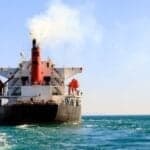


At least four oil and liquefied natural gas (LNG) tankers turned back while trying to pass through the Strait of Hormuz after fresh attacks on commercial vessels raised security concerns in one of the world’s busiest energy shipping routes.
The diversions came after a Qatari LNG tanker and a Saudi-flagged crude oil tanker were damaged near the strait on Tuesday following reports that Iran fired missiles at ships in the waterway.
Maritime authorities later raised the threat level for vessels transiting the Strait of Hormuz to “severe”, leading some operators to change their routes.
Ship-tracking data from Kpler and LSEG showed that three QatarEnergy-operated LNG carriers, Al Ghariya, Duhail and Al Ruwais, were sailing towards the Strait of Hormuz before changing course late on Tuesday.
All three vessels were empty and heading to Qatar’s Ras Laffan export terminal to load LNG cargoes.
The same data also showed that the Indian-flagged Very Large Crude Carrier (VLCC) Lila Vadinar, carrying around 2 million barrels of Kuwaiti crude loaded late last week, made a U-turn off the coast of Oman on Wednesday before entering the strait.
Despite the disruption, cargo movements have continued. Since the conflict began in late February, at least 16 LNG cargoes have left Qatar’s Ras Laffan terminal, while another 10 cargoes have departed ADNOC’s Das Island terminal in the United Arab Emirates.
However, this is still well below the combined monthly average of about 7 million metric tonnes usually shipped from the two export terminals.
A queue of empty vessels waiting to load cargo has also grown outside Ras Laffan.
According to Laura Page, Insight Manager for LNG and natural gas at Kpler, satellite images taken on July 7 showed 14 LNG tankers anchored offshore Ras Laffan.
Only one vessel, Umm Al Amad, was loading cargo at the terminal when the images were captured. The images also showed three waiting vessels with their Automatic Identification System (AIS) switched off.
Vortexa said more than 50 empty vessels controlled by QatarEnergy and ADNOC are currently positioned around the Middle East Gulf, India and the Strait of Malacca. Some of those vessels have had their AIS signals switched off for more than 10 days.
While some ships turned back, others successfully passed through the Strait of Hormuz.
LSEG and Kpler data showed the VLCC Mercury Hope, carrying 2 million barrels of Emirati crude loaded in early March, exited the strait on Wednesday. Its manager, Anglo Eastern Maritime, did not immediately respond to a request for comment.
The VLCC Tenjun, managed by Nippon Yusen KK, also exited the Strait of Hormuz late on Tuesday carrying 2 million barrels of Qatari crude loaded in late February. Nippon Yusen declined to comment.
Another VLCC, Pertamina Pride, managed by Indonesia’s state energy company Pertamina, left the strait on Tuesday with its AIS transponder switched off.
The tanker was carrying 2 million barrels of Saudi crude loaded in early March. Pertamina did not immediately respond to a request for comment.
Separately, Indian refiner Mangalore Refinery and Petrochemicals Ltd (MRPL) cancelled a charter for a vessel that had been booked to load crude oil from Iraq, according to two shipping sources familiar with the matter.
References: Reuters, Deccan Herald
Want to read more?
Check out the full article on the original site