Video: Ukrainian Drones Strike 21 Russian Ships In Sea Of Azov Over Past 72 Hours
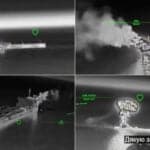


Ukraine said its drone forces struck 21 Russian-linked vessels in the Sea of Azov over the past 72 hours, targeting ships used to supply fuel to Russian-occupied Crimea in one of its biggest reported maritime drone campaigns since the war began.
The attacks, which Ukraine said hit 19 oil tankers, one cargo ship and one ferry, have raised concerns about security in the Black Sea. Maritime security firm Ambrey warned there is a “realistic possibility” that Russia could respond by targeting Ukraine-linked commercial shipping in the coming days.
Commander Robert “Magyar” Brovdi of Ukraine’s Unmanned Systems Forces said nine tankers were struck overnight on July 8, after 10 vessels were targeted on July 7 and two more on July 6. He said all of the vessels were operating in the Sea of Azov and were attacked as part of Ukraine’s efforts to disrupt fuel supplies to Crimea.
Even before the latest attacks were reported, Ambrey said the first 12 strikes recorded through July 7 marked the highest number of vessels targeted within a 48-hour period since the start of the war.
“The Sea of Azov strikes this week are more than another development in the Black Sea conflict—they represent a significant escalation in the Ukraine maritime security threat and a genuine shift in how this war is being fought at sea,” Ambrey said.
The company added that it sees a realistic possibility of Russian retaliation against Ukraine-linked shipping in the coming days. It warned that vessels waiting at Sulina Anchorage, including those bound for Ukrainian Danube and Black Sea ports, could face a higher risk of attack if Russia responds. Ambrey said Russian retaliation in similar situations has typically taken place within two to five days.
Ukraine’s 414th Separate Brigade, known as “Magyar’s Birds”, later confirmed the operation on X. It said its units, along with the 413th Separate Regiment “Raid” and the 1st Separate Center of the Unmanned Systems Forces, struck nine more Russian “shadow fleet” tankers during the night of July 8.
According to the brigade, a total of 21 vessels were hit over three days, including 19 tankers, one cargo ship and one ferry near Kerch. It said the operation was coordinated by the newly established Deep Strike Center of the Unmanned Systems Forces.
Ukraine also said it struck 53 military targets overnight in occupied Crimea and southern occupied territories. As part of what it called the “Crimean Switch Off” campaign, six more power substations were hit, bringing the total number of power facilities targeted between July 1 and July 8 to 50.
Brovdi named eight of the vessels that were hit. Based on Equasis records cited by Ambrey, they include the tankers Venus III, Sanar-1, Sanar-17, Teti, Aleksey Savrasov, Penelope and Climene, along with the dredger Ivan Cheremisinov.
Ambrey said many of these vessels are sanctioned by Ukraine, the European Union or the United States, or are operated by companies facing similar sanctions for transporting Russian oil. However, it said the ships were likely chosen because they were helping deliver fuel to Crimea rather than because of their sanctions status.
Magyar’s update: the tanker hunt continues.
The USF Birds struck 9 more russian shadow fleet tankers during the night of July 8 in the Sea of Azov.
21 vessels were hit over the past 72 hours: 19 shadow fleet tankers, 1 cargo ship, and 1 ferry in Kerch.
The operation was… pic.twitter.com/nWhJTU8vtQ
— 414 Magyar’s Birds (@414magyarbirds) July 8, 2026
Media reports said Russia had grouped tankers in Taganrog Bay, the largest bay in the Sea of Azov, while patrol ships reportedly stayed in port because of the drone threat.
Regional officials said eight of the vessels were anchored and two were sailing toward Rostov-on-Don when they were attacked. They said none of the vessels was carrying cargo, one crew had to be evacuated and two people were injured.
Russian authorities also said they shot down about 70 drones over 11 districts in the Rostov region during the attacks.
The maritime strikes were part of a wider Ukrainian campaign against Russian energy and military infrastructure.
Ukraine and Russian officials said overnight attacks also targeted the Saratov refinery, pipeline facilities, energy infrastructure in Tatarstan and Bashkortostan, and the Borisoglebsk military airfield in Russia’s Voronezh region, which Ukraine says is used by Russian combat aircraft.
The attacks followed a Ukrainian strike earlier this week on Russia’s Omsk refinery in Siberia, about 1,700 miles from Ukrainian-controlled territory. The refinery processed about 460,000 barrels of crude oil per day last year, according to Reuters. Two industry sources later told Reuters that the refinery stopped processing oil after the attack.
The disruption comes as parts of Russia face gasoline and diesel shortages that authorities have linked partly to repeated Ukrainian attacks on refineries and fuel depots. Long queues have formed at fuel stations in several cities, and some regions have introduced purchase limits.
Russia announced on Wednesday that it would temporarily ban diesel exports until July 31 to protect domestic fuel supplies.
Speaking on Russian state television, RT editor-in-chief Margarita Simonyan acknowledged the shortages, saying, “There is no petrol,” while urging people to remain calm. She compared the situation to the hardship that followed the collapse of the Soviet Union and said, “Yes, it is hard, yes, very hard.”
Ukraine says many of the vessels targeted in the Sea of Azov were part of Russia’s so-called shadow fleet and were transporting fuel to Crimea.
The latest attacks came as Ukrainian President Volodymyr Zelenskyy met U.S. President Donald Trump at the NATO summit in Ankara.
Zelenskyy said air defence remained Ukraine’s top priority and confirmed that Ukraine and the United States had started work on a separate drone cooperation agreement. Trump said the United States would allow Ukraine to manufacture Patriot air defence interceptors and described Zelenskyy as “very effective.”
“He’s had the best equipment because he had our equipment,” Trump said. “But somebody has to use that equipment. And you have a lot of brave people that are using that equipment.”
At the same time, Russia launched another wave of attacks on Ukraine using 169 Shahed-type drones, decoys and missiles. Ukraine said it shot down 139 drones, while five Iskander ballistic missiles hit four locations. Officials said about 20 drones reached their targets, including strikes on the port of Odesa that killed four people, injured six others and damaged infrastructure.
Kyiv was also attacked for the third time in a week, with officials reporting fires at storage facilities in the Desnyanskyi and Sviatoshynskyi districts after Russian missile and drone strikes.
Videos released by Ukraine’s Unmanned Systems Forces appeared to show drones hitting the bridges and accommodation blocks of vessels. Ambrey said this approach increases the risk of casualties among civilian seafarers because those areas are where crews are typically located.
References: Fox News, seatrademaritime
Want to read more?
Check out the full article on the original site