Trump Declares Iran Ceasefire ‘Over’ As US & Iran Exchange Strikes For Second Consecutive Night
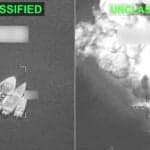


The United States carried out a second consecutive night of strikes on Iranian military targets, while Iran responded by targeting U.S. military bases in Bahrain, Kuwait and Qatar.
The renewed exchange comes after U.S. President Donald Trump said the ceasefire agreed with Iran last month was “over”, casting doubt over negotiations that had aimed to keep the strategic waterway open and reduce tensions.
The U.S. Central Command (CENTCOM) said it struck about 90 military targets across Iran, including missile and drone storage facilities, air defence systems and military logistics infrastructure along the country’s coastline.
CENTCOM said the strikes were intended to “further degrade Iran’s ability to attack commercial shipping and innocent civilian mariners” in the Strait of Hormuz. It also said the United States was responding to recent attacks on commercial ships and civilian crews operating in the waterway.
Iran’s Islamic Revolutionary Guard Corps (IRGC) said it launched retaliatory strikes on U.S. military bases in Bahrain and Kuwait, calling the attacks the “first phase of the punitive response against the American treaty-breakers.”
Gulf countries also reported Iranian attacks, with explosions heard in Bahrain’s capital, Manama, Kuwait saying it intercepted missiles and drones, and Qatar issuing a security alert.
Shipping Through Strait of Hormuz Declines
The latest fighting has already affected shipping through the Strait of Hormuz.
Phil Belcher, Marine Director at Intertanko, said only a single-digit number of ships used the southern transit route off the coast of Oman overnight after the latest escalation.
He said around 30 vessels are now passing through the Strait each day, down from about 70 a week ago and well below the roughly 130 daily transits seen before the conflict began earlier this year. Around 20 ships continue to use the northern route overseen by Iran.
Belcher said the shipping industry had become more optimistic after the memorandum of understanding signed by the United States and Iran last month, but that sentiment has now changed.
“This cycle of violence, this cycle of up-and-down, positive-negative news, it’s having an enormous impact both on business and on the seafarers themselves,” he said.
Trump Says Ceasefire Is ‘Over’
Speaking aboard Air Force One and earlier at the NATO summit, Trump said he no longer considered the ceasefire to be in effect.
“As far as I’m concerned, it’s over,” he said.
Trump also said Iran had contacted the United States seeking a deal, but questioned whether Tehran would honour any future agreement.
“I just don’t know if they’re worthy of making a deal. I don’t know that they’re going to honour the deal,” he said.
He later described Iran’s leaders as “scum”, “sick people” and “evil people”, and said he believed further negotiations would be “a waste of time.”
On Truth Social, Trump said the latest U.S. strikes were carried out “in retribution” for Iranian attacks on ships earlier this week.
He also said he was considering taking Kharg Island, Iran’s main oil export hub, and could reimpose a blockade on ships entering and leaving Iranian ports that had been lifted three weeks earlier.
Iran Condemns the Strikes
Iran’s Foreign Ministry described the U.S. attacks as a “gross war crime” and accused Washington of targeting civilian infrastructure, including railway bridges and a rail line linking Tehran with Mashhad, where former Supreme Leader Ali Khamenei is due to be buried on Thursday.
The ministry called the U.S. administration “evil and psychopathic.”
Iran’s Ministry of Health said U.S. attacks across five provinces on July 8 and 9 killed 14 people and injured 78 others. It said 47 people remain in hospital.
Iranian Foreign Minister Abbas Araghchi responded to Trump’s remarks on X, writing: “We do not answer vulgarity with vulgarity, but with action: fearlessly and with great valour.”
Iranian parliamentary speaker Mohammad Bagher Ghalibaf said on X that the United States “still hasn’t learned that bullying and breaking promises are no longer cost-free.”
“If you strike, you’ll get hit,” he wrote, adding that the Strait of Hormuz would only open under Iranian arrangements and not “American threats.”
Explosions Along Iran’s Coast
Iranian state media reported explosions in several southern coastal areas following the U.S. strikes.
Eight explosions were reported in Bandar Abbas, while missiles reportedly struck the ports of Sirik and Jask. Explosions were also reported in Konarak and Chabahar, and state television said projectiles hit Abu Musa island, which is claimed by both Iran and the United Arab Emirates.
Air defence systems were activated in Bandar Abbas.
Iranian media also reported power cuts in Chabahar and a fire at an IRGC barracks in Bushehr. The Iranian Students’ News Agency later said two of three damaged power lines in Chabahar had been restored and the third would be operational soon.
Ceasefire Under Pressure
The latest exchange is the most serious since the United States and Iran signed a 14-point memorandum of understanding on June 17.
The agreement included a 60-day ceasefire period, continued negotiations, safe passage for vessels through the Strait of Hormuz and the easing of U.S. sanctions on Iran.
Although the 60-day period has not yet ended, Trump said he no longer wanted to continue negotiations.
The United States carried out strikes on June 26 after an Iranian projectile hit a cargo ship in the Strait of Hormuz. More U.S. strikes followed on June 27 after another tanker attack before both sides later agreed to stand down.
References: BBC, nytimes
Want to read more?
Check out the full article on the original site