Video: U.S. Launches Retaliatory Strikes On Iran After Attacks On Commercial Ships In Strait Of Hormuz
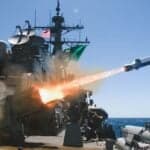


The United States launched a second consecutive round of military strikes against Iran after accusing Tehran of attacking three commercial vessels transiting the Strait of Hormuz.
Hours after the U.S. attacks, Iran responded by launching missiles and drones toward Bahrain and Kuwait, both of which host American military facilities.
The exchange has raised fresh concerns over the stability of the Strait of Hormuz, through which around one-fifth of globally traded oil and natural gas moved before the conflict.
The latest military exchanges also come after Washington revoked a licence that allowed Iran to sell crude oil on international markets, increasing pressure on Tehran.
According to U.S. Central Command (CENTCOM), American forces carried out additional strikes on July 8 targeting approximately 90 Iranian military sites, including air defence systems, coastal surveillance assets, missile and drone storage facilities, naval capabilities and military logistics infrastructure along Iran’s coastline.
The operation followed strikes conducted a day earlier against around 80 Iranian military targets, including more than 60 Islamic Revolutionary Guard Corps (IRGC) small boats, which the U.S. said were intended to degrade Iran’s ability to attack commercial shipping in the Strait of Hormuz.
CENTCOM said the operations were launched in response to Iranian attacks on three commercial vessels transiting the strait, describing the incidents as “a clear and dangerous violation of the ceasefire” that threatened freedom of navigation.
The vessels identified by U.S. officials were the Marshall Islands-flagged M/T Al Rekayyat, the Saudi Arabia-flagged M/T Wedyan, and the Liberian-flagged M/T Cyprus Prosperity.
One tanker travelling off the coast of Oman was struck and caught fire, according to the United Kingdom Maritime Trade Operations (UKMTO). Iranian state television said the liquefied natural gas tanker came under attack after ignoring warnings but did not directly claim responsibility.
UKMTO said the other two ships sustained damage but continued their transit through the Strait of Hormuz without reported injuries.
Iran has maintained control over shipping movements through the strait during the conflict, insisting that vessels use an approved Iranian route. Ships using routes closer to Oman’s coastline have repeatedly come under suspected attack, according to the reports.
Following the U.S. strikes, Iran’s Islamic Revolutionary Guard Corps said it had targeted U.S. military installations in Bahrain and Kuwait in retaliation.
Bahrain’s military said its air defence systems intercepted multiple Iranian missiles and drones, accusing Tehran of continuing attacks targeting civilians.
Kuwait’s armed forces also reported intercepting hostile missiles and drones, while authorities warned residents that explosion sounds were linked to air defence operations.
Iranian state media reported explosions in Bandar Abbas, Qeshm and Sirik following the U.S. strikes. Additional reports said strikes affected locations including Konarak, Chabahar, Iranshahr and a railway bridge near Aqqala. Electricity outages were reported in parts of Chabahar before power was restored.
Iran acknowledged the strikes but did not disclose military losses.
The renewed fighting has made it harder to convert a memorandum of understanding signed in June into a permanent peace agreement.
Talks had been expected to resume after the funeral of Iran’s Supreme Leader Ayatollah Ali Khamenei, who was killed at the beginning of the war on February 28.
The negotiations were expected to address reopening the Strait of Hormuz and Iran’s nuclear programme, but the latest military exchanges have put those plans in doubt.
Iranian Parliament Speaker Mohammad Bagher Ghalibaf accused Washington of violating the agreement, writing on X that “the era of bullying and extortion is over” and that Iran would not yield to pressure.
President Donald Trump, speaking while attending the NATO summit in Turkey, questioned whether negotiations would continue, saying he believed the interim ceasefire was effectively over, although he also said he did not expect a return to full-scale war.
References: the hindu, cnbc
Want to read more?
Check out the full article on the original site