Hanwha Systems Begins Sea Trials For 30-Ton AI-Powered Unmanned Surface Vessel
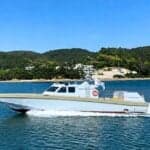


Hanwha Systems has launched a 30-ton unmanned surface vessel (USV) and started sea trials as it moves forward with plans to develop autonomous naval systems and expand into the global unmanned maritime defence market.
The South Korean defence company said on July 9 that the vessel, which it developed through its own investment, was launched near Gadeok Bridge in Busan in early June. It has since begun sea trials between Busan and Jangmok Port in Geoje.
Hanwha Systems is investing about 70 billion won of its own funds to develop both a 30-ton and a 140-ton unmanned surface vessel capable of carrying out combat missions.
The 30-ton USV will be used as a test platform through the end of 2027 to verify AI-based autonomous navigation technology and an open software architecture.
One of the company’s main goals is to meet the Unmanned Maritime Autonomy Architecture (UMAA), the U.S. Navy’s standard framework for autonomous maritime systems.
According to Hanwha Systems, the framework allows unmanned systems to assess situations and carry out missions with minimal human involvement while enabling them to work alongside other weapons systems and unmanned platforms.
The company said it had already completed autonomous navigation demonstrations under domestic standards using technologies developed for its Haeryeong reconnaissance USV. It is now beginning demonstrations to verify compatibility with the U.S. Navy’s UMAA standard.

The sea trials will test the vessel’s ability to navigate narrow waterways where ships are concentrated and turning space is limited, operate safely in high waves and strong winds, and carry out long-range autonomous missions over hundreds of kilometres.
Hanwha Systems also plans to further develop its AI-based autonomous navigation system so it can detect obstacles and targets, identify friend or foe, and track targets during operations.
The company said an unmanned surface vessel depends on the integration of systems such as mission management, machinery control and autonomous navigation.
It added that meeting internationally recognised software architecture standards is important for entering the global defence market.
Hanwha Systems plans to launch its 140-ton unmanned surface vessel by the end of this year.
“Through Hanwha Systems’ unmanned surface vessels that fully internalize global standards, advanced AI autonomous navigation technology, and command-and-control technology, we will expand the territory of South Korea’s maritime defense technology to the world,” said Moon-ki Yoo, head of Hanwha Systems’ Naval Business Division.
References: Chosun Biz, thelec
Want to read more?
Check out the full article on the original site