Iran-US Escalation Raises Fears Of New Transit Restraints & Fees In The Strait Of Malacca
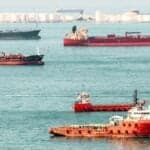


The Strait of Malacca has come into focus after proposals related to the Strait of Hormuz raised concerns about whether similar measures could affect other major global shipping routes.
Investors shifted their attention to the Southeast Asian waterway after reports that Iran and Oman proposed jointly managing the Strait of Hormuz, including introducing administrative fees for commercial vessels once a 60-day safe navigation agreement expires.
While maritime experts say there is little chance that similar charges will be introduced in the Strait of Malacca, the discussion has raised questions about the security and governance of some of the world’s busiest maritime trade routes and the potential impact of higher shipping costs on global energy markets.
Oil prices climbed after U.S. President Donald Trump declared the U.S.-Iran ceasefire over and pledged further military action against Iran.
Tensions increased after Iran attacked three commercial vessels using an alternative route near Oman’s coast in the Strait of Hormuz. In response, the United States carried out strikes on Iranian military targets.
Iran has also threatened to close the Strait of Hormuz and expand attacks across the region.
The Strait of Hormuz carries about 20% of the world’s oil trade, so any disruption could affect global energy markets. Investors are also watching whether charging ships to use key waterways could become part of future discussions elsewhere.
According to CNBC, citing data from the U.S. Energy Information Administration (EIA), the Strait of Malacca handled 29% of global seaborne oil flows in the first half of 2025.
More than 94,000 vessels transit the strait every year, carrying nearly half of the world’s seaborne oil and around 30% of global traded goods, making it one of the world’s busiest and most strategically important shipping routes.
The approximately 900-kilometre waterway runs between Indonesia, Malaysia, Thailand and Singapore. It provides the shortest sea route linking the Indian and Pacific oceans and serves as the main route for crude oil shipments from the Middle East to major Asian economies, including China, Japan and South Korea.
Its narrowest section, the Phillips Channel near Singapore, is only about 2.8 kilometres wide, making it one of the world’s most important maritime chokepoints.
If the route were disrupted, ships would have to sail around Australia, adding an estimated 10 to 15 days to their voyages and increasing fuel and operating costs.
Janiv Shah, Vice President of Commodity Markets at Rystad Energy, said some investors are becoming concerned that if transit charges are introduced in the Strait of Hormuz, similar ideas could eventually be considered for other strategically important waterways, particularly the Strait of Malacca because of its role in global oil trade. However, he said implementing such a system would likely take considerable time.
Despite those concerns, maritime experts remain doubtful that transit fees could legally be introduced in the Strait of Malacca.
Indonesia’s Finance Minister Purbaya Yudhi Sadewa suggested in April that the country could introduce tolls for ships using the strait, but later withdrew the proposal.
International law guarantees the right of transit passage through straits used for international navigation, making mandatory tolls difficult to implement.
Indonesia’s President Prabowo Subianto and Singapore Prime Minister Lawrence Wong also reaffirmed their commitment to keeping the Strait of Malacca open for international shipping following talks in Jakarta.
Hunter Marston, Director of the Southeast Asia Program at the Lowy Institute, said the Strait of Malacca should be regarded as a maritime chokepoint rather than a geopolitical flashpoint.
He added that the Malacca Straits Patrol, operated jointly by Indonesia, Malaysia, Singapore and Thailand, helps keep the waterway open and secure for international trade.
Analysts at the Center for Strategic and International Studies (CSIS) said Iran’s efforts to control shipping and charge fees for vessels using the Strait of Hormuz have also raised concerns about other key waterways, including the Strait of Malacca and the Taiwan Strait.
They said that while ships could use alternative routes if either waterway is disrupted, doing so would increase shipping costs and add pressure to global supply chains.
References: oilprice, cnbc
Want to read more?
Check out the full article on the original site