Pakistan Begins Construction Of First Domestically Built Containership Since 1980s
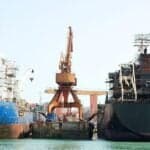


Pakistan has resumed commercial shipbuilding after more than 40 years, with construction underway on a 1,100-TEU feeder containership at Karachi Shipyard & Engineering Works (KSEW).
The project is Pakistan’s first commercial containership built since the early 1980s and is part of the government’s plan to develop the maritime sector, improve ports and reduce dependence on imported ships.
Steel cutting for the vessel has been completed, according to Vice Admiral (Retd.) Iftikhar Ahmad Rao, Chairman of the Prime Minister’s Task Force on Maritime Reforms.
Rao said during a briefing in Islamabad on Thursday that commercial containership construction had resumed at Karachi Shipyard under a contract signed with Pakistan National Shipping Corporation (PNSC), marking the first such project at the yard since the early 1980s.
He added that construction had already started and the project cost was several million dollars lower than the market rate.
The vessel is being built for the state-owned Pakistan National Shipping Corporation (PNSC). Steel cutting began in January 2026 after the project was revived following financial delays.
The shipbuilding contract was originally signed between KSEW and PNSC in February 2024 and is valued at $24.75 million, according to PNSC’s financial accounts.
A PNSC tender issued in June states that the vessel will sail under the Pakistan flag and be classed by Bureau Veritas. The selected consultant will supervise the ship’s design, construction, sea trials and warranty period.
The 1,100-TEU vessel is expected to support PNSC’s feeder container services and reduce Pakistan’s dependence on foreign shipping companies.
Officials say building the ship locally will also help reduce foreign exchange spending on imported vessels and freight services.
Karachi Shipyard, established in 1956 and operating under Pakistan’s Ministry of Defence Production, has mainly built naval vessels in recent decades, including frigates, corvettes, fleet tankers and logistics ships.
The yard can construct vessels of up to 26,000 deadweight tonnes (dwt), including cargo ships, tankers, dredgers, ferries and tugs.
The containership project is part of reforms introduced by the Prime Minister’s Task Force on Maritime Reforms, which was set up in August 2024. Rao said the task force identified 99 bottlenecks in Pakistan’s maritime sector and has implemented 84 recommendations within a year.
One of the measures was the removal of a 22% domestic sales tax on vessel purchases and shipbuilding materials.
Rao said high taxes had previously encouraged Pakistani shipowners to register their vessels in countries such as Panama and Liberia. He also noted that neighbouring India provides a 30% subsidy for shipbuilding.
According to officials, Pakistan’s maritime sector currently contributes less than 1% to the country’s GDP.
The government aims to increase that contribution by expanding the national fleet, improving port infrastructure and developing the country’s blue economy, which it estimates could reach $100 billion annually by 1947.
The reform programme has also focused on improving port operations by introducing advanced container scanners, 24-hour working shifts and relocating third-party testing laboratories inside ports. These measures are intended to reduce average customs clearance times to 12 hours.
Officials said Karachi Port Trust has climbed 30 places over the past five years to 69th in the World Bank’s Container Port Performance Index, while Port Qasim ranked fifth among the world’s fastest-improving container ports.
Pakistan is also working to revive its ship recycling industry at Gadani, which declined after failing to meet modern environmental standards.
Following the country’s accession to the International Maritime Organization’s Hong Kong Convention for the Safe and Environmentally Sound Recycling of Ships, officials said five ship recycling yards have achieved full compliance.
Officials say expanding domestic shipbuilding will help save foreign exchange, create manufacturing jobs and support the long-term growth of Pakistan’s maritime sector.
References: portnews, the news pk
Want to read more?
Check out the full article on the original site